Turnkey Office Fitout Sydney: The Complete Single-Provider Guide
Last updated:
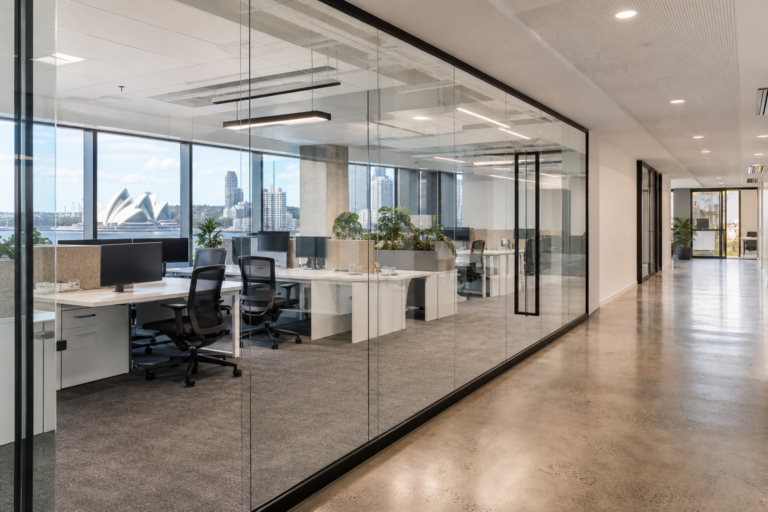
A turnkey office fitout Sydney project puts one provider in charge of every stage of your workspace transformation — from initial brief and space planning through design, construction, and final handover. Instead of coordinating separate architects, builders, electricians, and furniture suppliers, you work with a single point of contact who delivers a move-in-ready office on time and on budget. For Sydney businesses that need a new workspace without the hassle of managing multiple contractors, a turnkey office fitout Sydney solution is the fastest, most cost-effective path to a productive work environment.
At Office Fitouts Sydney, we deliver complete turnkey fitout packages across the Sydney CBD and greater metro area. This guide explains exactly what a turnkey fitout includes, how it compares to traditional multi-vendor approaches, what it costs in 2026, and how to choose the right provider for your project.
What Is a Turnkey Office Fitout?
A turnkey office fitout is a comprehensive, end-to-end service where a single company manages every phase of your office transformation. The term “turnkey” comes from the idea that you simply turn the key and walk into a finished, fully functional office. No loose ends, no coordinating between separate trades, and no surprises at handover.
The turnkey model integrates services that are typically split across multiple providers:
- Space planning and design — Layout optimisation, workplace strategy, and interior design
- Project management — Timeline coordination, compliance management, and stakeholder communication
- Construction and installation — Demolition, partitioning, joinery, flooring, and painting
- Mechanical, electrical, and plumbing (MEP) — HVAC modifications, electrical distribution, lighting, and data cabling
- Furniture, fixtures, and equipment (FF&E) — Workstations, meeting room furniture, storage, and kitchen fitout
- Technology integration — AV systems, network infrastructure, access control, and smart building controls
- Compliance and approvals — Council DA/CDC applications, building certifications, and fire safety compliance
The critical distinction is accountability. With a turnkey model, one entity owns the outcome. If a delay in electrical work pushes back the joinery schedule, that is the turnkey provider’s problem to solve — not yours.
Turnkey Office Fitout Sydney: What Is Included in the Package?
A genuine turnkey office fitout Sydney package covers every element needed to transform a bare or existing space into a move-in-ready workplace. Here is a detailed breakdown of what you should expect.
1. Initial Consultation and Briefing
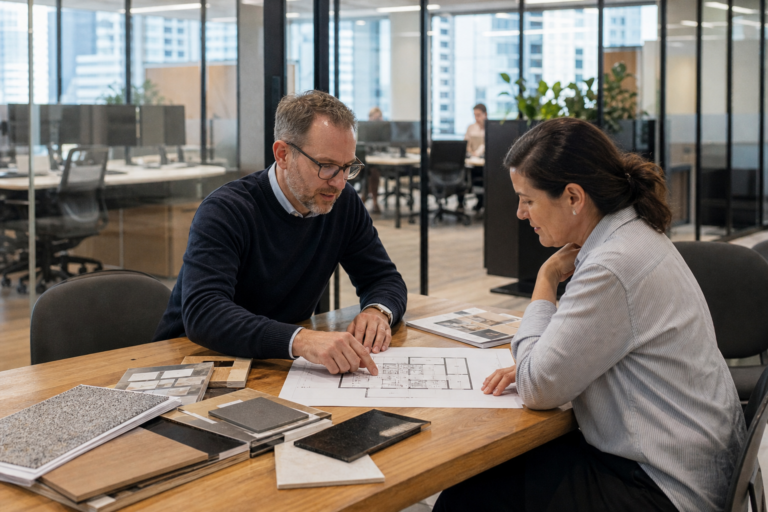
The project starts with a detailed brief. Your turnkey provider will assess your current workspace challenges, headcount projections, working style preferences, brand requirements, and budget parameters. This brief drives every design and construction decision that follows.
A thorough brief typically covers:
- Current and projected headcount (12-month and 36-month forecasts)
- Work modes — desk-based, collaborative, hybrid, activity-based working
- Meeting room and breakout space requirements
- Technology and AV requirements
- Brand and culture expression goals
- Budget envelope and timeline constraints
2. Space Planning and Workplace Strategy
Professional space planning translates your brief into a functional layout. The provider measures your floor plate, analyses traffic flow, and maps zones for focused work, collaboration, social interaction, and utility areas. Modern turnkey providers incorporate activity-based working (ABW) principles, ensuring your layout supports multiple work modes rather than just rows of desks.
3. Interior Design and Documentation
Design development transforms the floor plan into a fully specified environment. This includes material selections, colour palettes, lighting design, joinery details, and finish schedules. Your turnkey provider produces construction-ready documentation — detailed drawings, specifications, and schedules that contractors build from.
4. Council Approvals and Compliance
Sydney office fitouts must comply with the National Construction Code (NCC 2025), relevant Australian Standards, and local council requirements. Depending on the scope, your project may need a Development Application (DA) or a Complying Development Certificate (CDC). A turnkey provider manages the entire approvals process, including:
- Building Code of Australia (BCA) compliance assessment
- Fire safety engineering reports and certification
- Disability access compliance under AS 1428
- Mechanical ventilation compliance
- Occupation Certificate (OC) procurement
5. Construction and Fit Out
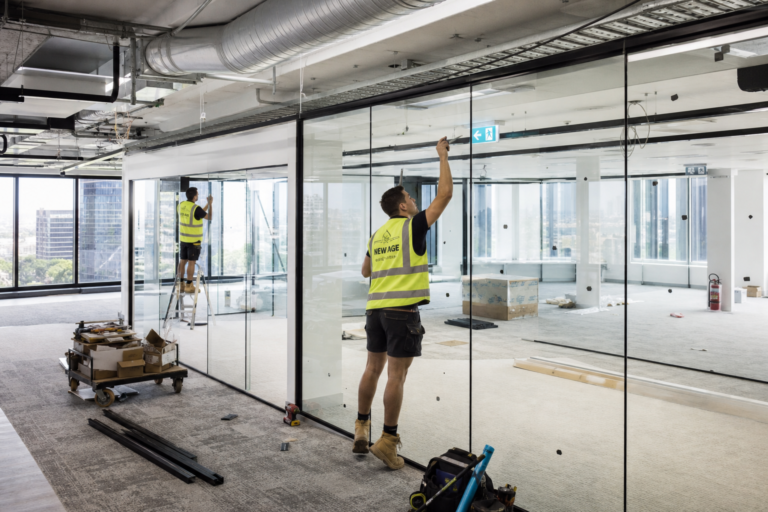
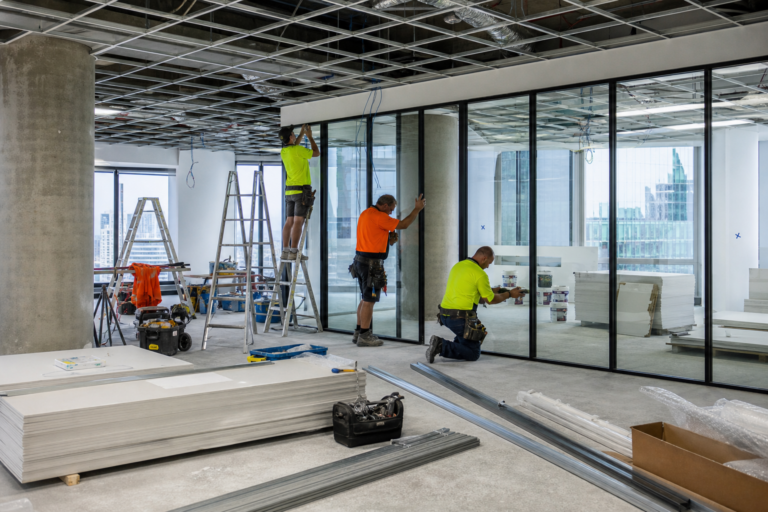
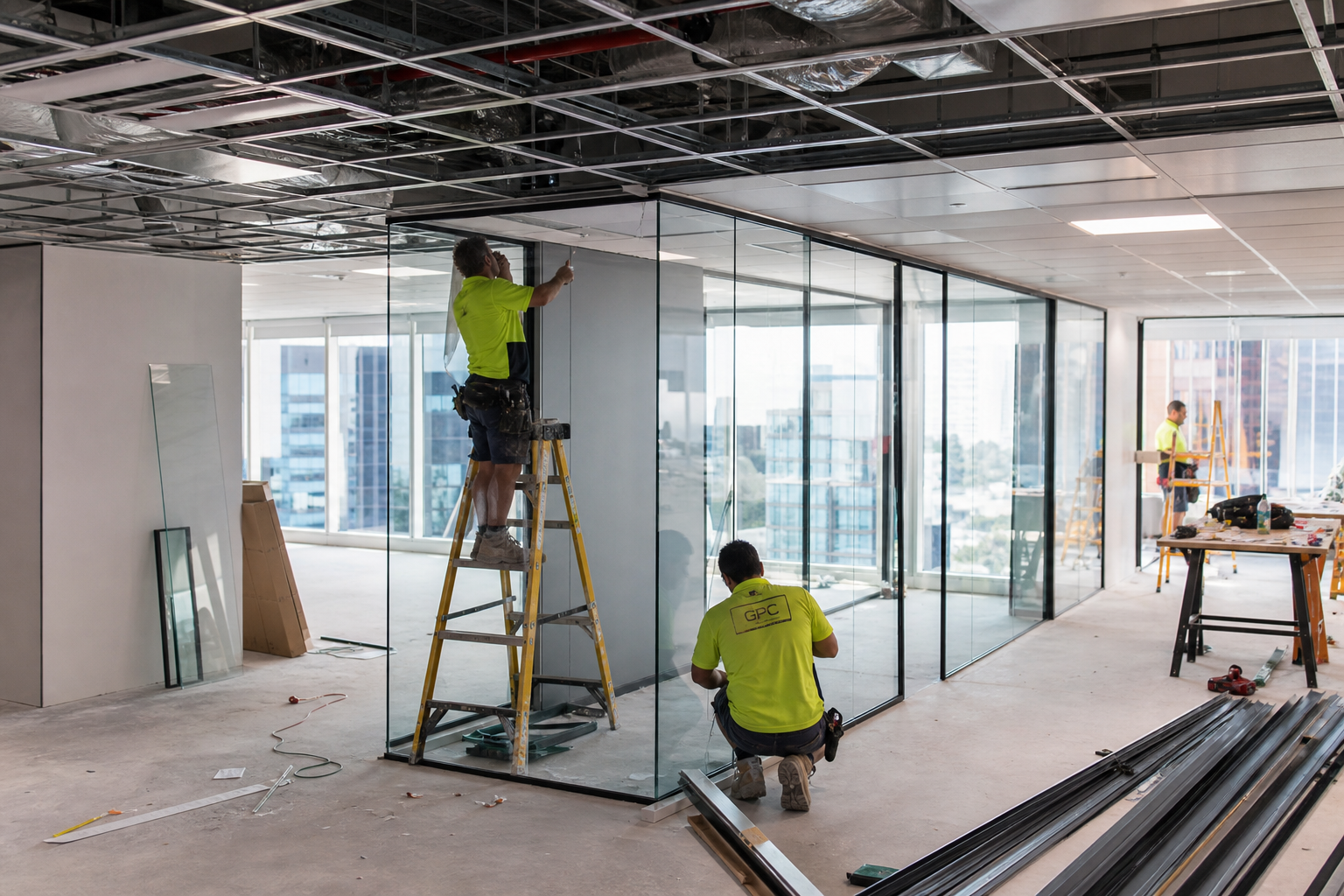
The build phase covers all physical works — demolition of existing partitions, structural modifications, new partition walls, joinery fabrication and installation, flooring, painting, ceiling works, and glazing. In a turnkey model, the construction team has been involved since the design phase, which means buildability issues are resolved before they become expensive on-site problems.
6. Mechanical, Electrical, and Plumbing
MEP works are often the most complex and disruptive element of an office fitout. A turnkey approach coordinates all services simultaneously:
- HVAC — Air conditioning modifications, new splits or VRF systems, ductwork, and controls
- Electrical — Power distribution, GPOs, dedicated circuits, switchboard upgrades
- Lighting — LED panels, task lighting, feature lighting, and NCC 2025-compliant controls with reduced illumination power density (5-7 W/m²)
- Data and communications — Structured cabling, fibre, Wi-Fi access points, comms room fitout
- Plumbing — Kitchen and bathroom modifications, hot water, and waste connections
7. Furniture and Equipment
Turnkey providers either supply furniture directly or manage procurement from preferred suppliers. This includes sit-stand workstations, ergonomic task chairs, meeting tables, soft furnishings, storage systems, and kitchen appliances. Having one provider manage FF&E eliminates the common problem of furniture arriving before the space is ready, or worse, after staff have already moved in.
8. Technology and AV Integration
Modern offices require integrated technology. A turnkey fitout includes AV systems for meeting rooms (screens, cameras, speakers), room booking systems, access control, security cameras, and smart building controls. The technology layer is designed alongside the physical fitout, ensuring cable pathways, power, and mounting points are all in place.
9. Handover and Defects Liability
A turnkey handover means you receive a complete, move-in-ready office with all defects rectified, all certifications in place, and all systems commissioned and tested. A reputable provider includes a defects liability period (typically 12 months) during which any issues are rectified at no additional cost.
Turnkey Office Fitout Sydney vs Traditional Multi-Vendor Approach
Understanding the differences between a turnkey approach and the traditional method helps you make the right decision for your project.
Traditional Multi-Vendor Approach
In the traditional model, the client engages separate professionals at each stage. An architect or interior designer produces drawings. Those drawings go to tender with multiple builders. The winning contractor builds the space. The client separately procures furniture, AV, and technology. This model has advantages for very large or complex projects where specialised consultants add value, but for typical office fitouts of 100-2,000 square metres, it introduces significant coordination overhead.
Common problems with the multi-vendor approach:
- Scope gaps — Items that fall between the designer’s scope and the builder’s scope often get missed
- Cost escalation — Design changes require re-pricing, and competitive tension is lost after contract award
- Timeline blowouts — Sequential procurement (design, then tender, then build) extends the overall program
- Accountability gaps — When something goes wrong, the designer blames the builder and vice versa
The Turnkey Advantage
A turnkey office fitout Sydney project compresses the timeline by overlapping design and procurement phases. Industry data shows integrated delivery models reduce overall project duration by 17-35% compared to traditional methods. That translates to 3-5 weeks of earlier occupation on a typical Sydney office fitout, which directly reduces double-rent costs during a relocation.
Key advantages of the turnkey model:
- Single point of accountability — One contract, one provider, one entity responsible for the outcome
- Faster delivery — Design and procurement overlap rather than running sequentially
- Cost certainty — Budget is developed progressively as design elements are confirmed, eliminating surprise escalations
- Reduced client burden — No need for an internal project manager or separate contract administrators
- Design integrity — The construction team understands the design intent because they were involved from day one
How Much Does a Turnkey Office Fitout Sydney Cost?
Turnkey office fitout costs in Sydney in 2026 range from $900 to $3,000+ per square metre, depending on the quality level and scope. Because the turnkey model includes design fees, project management, and furniture within one package, the headline rate per square metre may appear higher than a construction-only quote. However, the total project cost is typically lower because it eliminates separate consultant fees, reduces variations, and compresses the program.
2026 Sydney Turnkey Fitout Cost Guide
| Fitout Level | Cost per sqm | What Is Included |
|---|---|---|
| Essential | $900 – $1,400 | Paint, carpet, basic partitioning, standard lighting, minimal joinery, workstation furniture |
| Professional | $1,400 – $2,200 | Custom joinery, glass partitions, upgraded M&E services, branded finishes, ergonomic furniture |
| Premium | $2,200 – $3,000+ | High-end finishes, bespoke joinery, full mechanical redesign, AV integration, acoustic treatment, biophilic elements |
For a typical 300 sqm office in the Sydney CBD at the professional level, expect a total project cost between $420,000 and $660,000, inclusive of design, construction, furniture, and project management.
Factors that influence your turnkey fitout cost include:
- Base building condition — A warm shell with existing services costs less than a cold shell
- Ceiling height and floor plate complexity — Heritage buildings and irregular shapes add cost
- MEP scope — HVAC redistribution and switchboard upgrades are major cost drivers
- Furniture specification — Imported European furniture versus Australian-manufactured options
- Make good obligations — Lease terms may require reinstatement at exit, which affects design decisions
How Long Does a Turnkey Office Fitout Sydney Take?
A turnkey approach is significantly faster than the traditional route because phases overlap. Here is a typical timeline for a 200-500 sqm turnkey office fitout in Sydney:
- Brief and site assessment — 1-2 weeks
- Concept design — 2-3 weeks
- Design development and approvals — 3-5 weeks (overlaps with procurement)
- Construction — 6-10 weeks
- FF&E installation and technology commissioning — 1-2 weeks
- Defect rectification and handover — 1 week
Total: 14-23 weeks from brief to move-in.
Compare this with the traditional sequential approach, which typically takes 20-30 weeks for the same project scope. The turnkey model saves time primarily by eliminating the separate tender period (3-4 weeks) and overlapping design documentation with early procurement.
When Should You Choose a Turnkey Office Fitout Sydney Provider?
The turnkey model is the right choice when:
- You have a firm deadline — Lease commencement dates, team relocations, and business launches create fixed deadlines
- You lack internal project resources — Small and medium businesses rarely have a dedicated facilities or project management team
- Budget certainty matters — Turnkey contracts can be structured as fixed-price or guaranteed maximum price (GMP)
- Your fitout is 100-2,000 sqm — This size range benefits most from the turnkey model’s efficiency
- You are relocating — A turnkey provider can coordinate the relocation alongside the fitout
The traditional multi-vendor approach may be more suitable for very large fitouts (5,000+ sqm), specialised facilities (laboratories, data centres), or organisations with sophisticated internal project teams that want direct control over each trade package.
How to Choose the Right Turnkey Office Fitout Sydney Provider
Selecting the right provider is the single most important decision in a turnkey project. Here is what to evaluate.
Experience and Portfolio
Look for a provider with a track record of completed turnkey projects in Sydney, particularly in your size range and industry. Ask for case studies, not just photos — you want to understand how they managed the project, not just what it looked like at completion. Office Fitouts Sydney showcases a range of completed projects across the Sydney metro area.
In-House Capabilities
A genuine turnkey provider has in-house design, project management, and construction capabilities. Some companies market themselves as turnkey but simply subcontract every element. Ask specifically which services are performed in-house and which are subcontracted. The more in-house capability, the greater the accountability and coordination.
Licensing and Insurance
Verify that your provider holds the appropriate NSW Fair Trading builder’s licence for the value and scope of your project. Confirm they carry adequate public liability insurance (minimum $20 million), professional indemnity insurance, and workers’ compensation coverage.
Contract Structure
A well-structured turnkey contract should include:
- A clearly defined scope with detailed specifications
- A fixed or guaranteed maximum price with a defined variation process
- A realistic program with key milestones and a contractual completion date
- A defects liability period (12 months minimum)
- Retention provisions to ensure defects are rectified
- Appropriate liquidated damages for late completion
Communication and Reporting
During a turnkey project, you should receive regular progress reports — ideally weekly — with updated photos, program status, budget tracking, and risk alerts. Ask prospective providers about their reporting tools and communication cadence before you engage them.
Turnkey Office Fitout Sydney: Industry Trends for 2026
The Sydney turnkey fitout market in 2026 is shaped by several significant trends:
- Hybrid workspace design — Turnkey providers are designing for occupancy rates of 60-70% rather than 100%, incorporating hot-desking, collaboration zones, and focus pods
- NCC 2025 compliance — The updated National Construction Code introduces reduced illumination power density requirements (5-7 W/m²) and expanded daylight harvesting mandates, which affect lighting design in every turnkey fitout
- AASB S2 sustainability reporting — From January 2026, Group 2 entities must report on Scope 3 emissions, which includes tenant fitouts. Turnkey providers who can document embodied carbon in materials have a competitive advantage
- Resimercial design — Blending residential comfort with commercial functionality, including soft furnishings, domestic-scale kitchens, and residential lighting
- Neurodiversity-inclusive design — Quiet rooms, sensory-controlled environments, and varied lighting zones are becoming standard in progressive turnkey fitouts
- Biophilic elements — Living walls, natural materials, and increased visual connection to outdoor environments, which research consistently links to improved occupant wellbeing and productivity
Frequently Asked Questions
What does “turnkey” mean in an office fitout context?
Turnkey means a single provider manages every aspect of your office fitout — design, approvals, construction, furniture, technology, and handover. You receive a completed, move-in-ready office. The term comes from the concept of simply turning the key to open your new workspace.
How much does a turnkey office fitout Sydney cost per square metre?
In 2026, a turnkey office fitout in Sydney costs between $900 and $3,000+ per square metre depending on the quality level. An essential fitout runs $900-$1,400/sqm, a professional fitout $1,400-$2,200/sqm, and a premium fitout $2,200-$3,000+ per sqm. These rates include design, construction, furniture, and project management.
Is a turnkey fitout more expensive than managing separate contractors?
The per-square-metre rate for a turnkey fitout may appear higher because it bundles design, project management, and furniture into one price. However, total project costs are typically comparable or lower because turnkey eliminates coordination overhead, reduces variations, and compresses the timeline — which reduces double-rent and lost-productivity costs.
How long does a turnkey office fitout Sydney project take?
A typical turnkey fitout for a 200-500 sqm office in Sydney takes 14-23 weeks from initial brief to move-in. This is 17-35% faster than the traditional sequential approach because design, procurement, and early construction phases overlap.
What should I look for in a turnkey office fitout Sydney provider?
Key criteria include in-house design and construction capabilities, a portfolio of completed projects in your size range, appropriate NSW Fair Trading licensing, adequate insurance coverage, transparent contract structures with fixed pricing, and clear communication and reporting processes.
Can a turnkey provider handle council approvals in Sydney?
Yes. A genuine turnkey provider manages all regulatory approvals, including Development Applications (DA), Complying Development Certificates (CDC), fire safety compliance, disability access assessments, and Occupation Certificates (OC). This is one of the key advantages of the turnkey model — you do not need to engage a separate certifier or BCA consultant.
What is included in a turnkey office fitout handover?
A proper turnkey handover includes a completed, move-in-ready workspace with all defects rectified, an Occupation Certificate, as-built documentation, operations and maintenance manuals for all systems, warranty certificates for materials and equipment, and the commencement of a defects liability period (typically 12 months).
Make Office Fitouts Sydney a preferred source in Google
One click tells Google to surface our articles more often in Top Stories, AI Overviews and AI Mode.