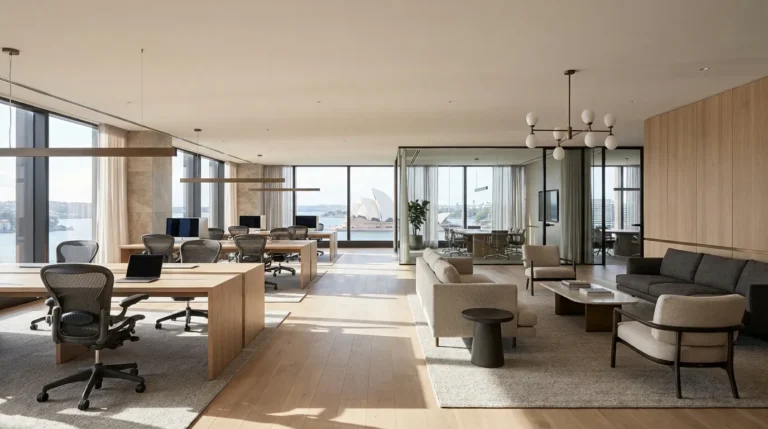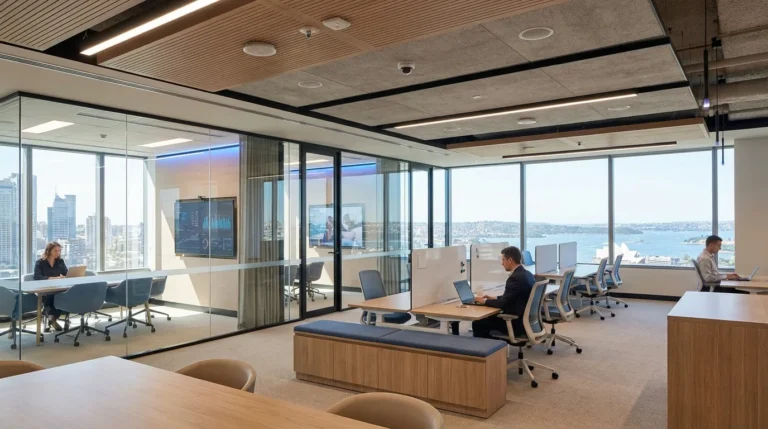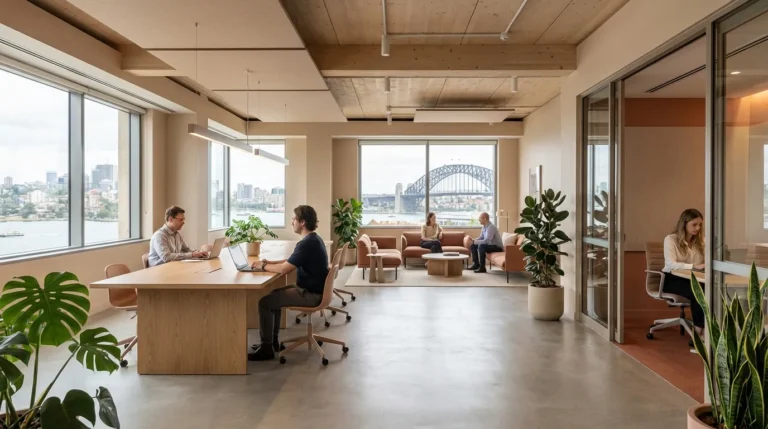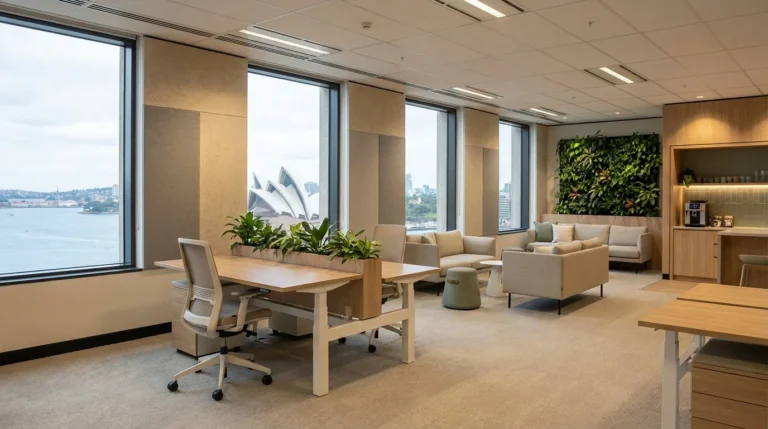
Office Construction Management for Stress-Free Fitouts
Office renovations often begin with excitement. New layouts. Smoother movement. A space that actually supports how your team works each day (and maybe even fixes those awkward jams by the printer). The problem is that for many Sydney businesses, the reality feels very different. Deadlines slide. Costs creep up. Consultants give conflicting advice. And stress you didn’t expect shows up fast.
That’s where office construction management can change the experience. When it’s done well, it turns a complex office fitout into a clear, guided process that’s much easier to handle. Instead of mixed signals, you deal with one team working from one plan, with a single point of responsibility you can call. Ideas move through approvals, building, and final handover with less confusion and, in most cases, fewer surprises and clearer choices along the way.
This article looks at how office construction management works in real life. No theory. It covers planning, cost control, approvals, construction, and design choices that think ahead, like flexible layouts and services that can grow later. You’ll also see why office fitout project management is now key for Sydney businesses facing tight timelines and higher expectations.
What Office Construction Management Really Means
Office construction management isn’t just about what happens on site each day. It usually covers the full fitout process, starting with the first brief and running through to final cleaning, handover, and sign‑off, the less glamorous steps that often matter most. That wider view is the real difference, and it’s something people often miss.
In Sydney, this approach is becoming more common rather than unusual. Costs keep rising, buildings are often technically complex, and councils apply controls that can be stricter than expected. When budgets are fixed, there’s very little room for mistakes.
At its core, construction management brings design, approvals, budgets, and delivery into one clear plan. Instead of juggling several consultants, you work with one team that keeps everything moving in the same direction. In my experience, that clarity really helps when decisions stack up and timelines start to tighten.
The Australian construction market is large and fast‑moving, even for modest office upgrades. Recent data shows just how busy things are, competition is strong, and you can feel that pressure on site.
| Metric | Value | Year |
|---|---|---|
| Australian construction market size | AUD 193.2 billion | 2026 |
| Typical office fitout cost | AUD 3,220 per m2 | 2025 |
| National building escalation rate | 5.2% | 2026 |
With spending at these levels, small planning gaps can quickly become costly problems. That’s why experienced construction management usually focuses on risk early. This often means locking down scope, checking buildability sooner, and setting timelines based on real site conditions, not ideal ones. That practical approach tends to matter most for clients.
Michael Brown from WT Partnership explains the current environment clearly.
We’ve entered a momentary breather, not a reset. Fitout businesses shouldn’t assume that the challenges of 2021 to 2023 are behind us. They’re likely to reappear, just driven by different forces and happening at different speeds across the country.
Planning an Office Fitout Without the Stress of Office Construction Management
A smooth office fitout usually starts with solid planning, but not in a neat, one-size-fits-all way. It’s more than sketching a floor plan and hoping for the best (we’ve all seen how that goes). What often helps is a clear project roadmap that shows what happens first, what comes next, and who’s responsible at each stage, so last-minute scrambling is less likely.
Office fitout project management often begins by looking closely at how the business actually works day to day. Headcount matters, of course, but growth plans, hybrid work patterns, and how often clients visit can shape decisions just as much. These details feed straight into the layout, services, finishes, and overall feel of the space, leaving less room for guesswork.
Before anything is locked in, feasibility comes into play. Think of it as a reality check. The team tests the design against the budget, reviews base building limits, and flags required approvals. In Sydney, council and strata approvals often take weeks, so starting early usually helps.
Early cost planning fits naturally here. Construction managers often bring in contractors and suppliers sooner than expected, which can reduce redesigns, delays, and stressful last-minute changes.
A typical planning phase includes:
- A detailed site inspection, including access and services (the boring but important stuff)
- Test fits and early concept layouts
- Budget estimates with clear allowances
- Program planning and staging (who moves when)
- Authority and landlord approvals
For businesses just starting out, this step-by-step planning guide for Sydney businesses shows what the process can look like in practice: Plan Office Renovation: Step-by-Step Guide for Sydney Businesses.
Additionally, healthcare facilities often face unique design and compliance challenges. To explore how those are managed, see Healthcare Office Fitouts Sydney: Key Design Requirements.
Managing Construction, Trades, and Timelines
Once work starts on site, good construction management is usually clear pretty quickly. The site feels organised, often within the first day or two, and trades know what they’re doing and where they need to be. That early structure usually leads to fewer surprises. Small problems are spotted early and fixed before they turn into delays, which can save a lot of stress later on.
The challenge comes from the number of moving parts involved. Joinery, electrical, mechanical, data, fire, and access all overlap on a busy site. Each trade depends on the one before it, so when the order slips even slightly, delays tend to follow soon after.
In Sydney offices, after-hours work is often used to limit disruption during the day. While this helps, it also adds complexity. Noise limits, lift bookings, and strict building management rules all come into play, with little room to adjust.
Strong construction management keeps daily site activity, safety and compliance checks, and trade scheduling on track. Most issues usually come from weak oversight, late materials, unclear drawings, or slow decisions, which is exactly what this role is meant to avoid.
To help visualise modern construction workflows and site coordination, this video gives a practical look at how commercial fitouts are managed today.
Designing for Hybrid Work, Technology, and Growth
The biggest change in office fitouts isn’t furniture, it’s flexibility. Offices now need to handle change, because teams and business needs keep shifting, often faster than expected. For most spaces, this means layouts that can change without pulling everything apart.
Across Sydney, hybrid work is now the norm. People usually come in to work together, rather than spend the day on quiet solo tasks. This pushes layouts in a new direction, sometimes more than teams expect, and it’s noticeable as soon as you walk in.
You’re seeing more meeting rooms, quiet focus areas, movable furniture, and casual spaces that weren’t common before. The overall feel is more relaxed, which helps people actually use the space.
Technology matters more than ever. Smart lighting and booking systems are common, and meeting rooms need to be AV‑ready. Designers and builders usually plan this early, because shortcuts don’t last.
According to Cushman and Wakefield, limited supply of prime offices is increasing demand for quality fitted spaces, where good design often makes the difference.
Developers have become more cautious about speculative supply, moderating near-term completions and tightening the pipeline for prime product.
That’s why well‑run refurbishments are becoming more valuable. When technology planning is included, this breakdown is useful: 2026 Office Technology Forecast: Smart Workplace Trends. Construction managers usually help with flexible layouts, staged upgrades, and enough capacity to handle what’s next.
Moreover, Sydney property managers can benefit from tailored refurbishment strategies outlined in Office Refurbishment Services for Sydney Property Managers.
Sustainability and Compliance in Modern Fitouts
What’s shaping fitout decisions now? Sustainability, for one, and it usually comes up first. It’s no longer a nice extra. It affects leasing choices, staff comfort, and everyday running costs, often more than it did just a few years ago, and that change is easy to see.
Across Sydney, businesses often ask for low‑VOC materials and energy‑efficient lighting. Construction management helps find those options while keeping budgets on track, which isn’t always simple, and it clears up a lot of uncertainty along the way.
Compliance sits right next to sustainability. Accessibility rules and fire upgrades need close attention, because missing even one item can delay approvals and slow a project fast. There’s little room for shortcuts.
Office construction management keeps these checks in play during design, not at the end, when fixes usually cost more. Refurbishing instead of rebuilding is often the more sustainable option, cutting waste and timelines, which is why many landlords prefer it for existing assets.
For projects involving lease‑end works or compliance upgrades, this guide outlines what to expect: Office Make Good Guide: Lease End Compliance & Refurbishment.
Bringing It All Together for a Smooth Handover
Probably the clearest sign of good management shows up at the very end. This is where it matters most, with nowhere to hide. Practical completion often feels calmer and more organised than people expect, quieter, and not rushed or chaotic.
That’s why a well-managed office fitout usually wraps up with:
- Full quality inspections across the whole space (every room, not just the obvious ones)
- Proper testing and commissioning of all services
- Defects fixed as they appear, not saved for later
- Clear, genuinely usable as-built documentation
- A clean, ready-to-use handover with keys, systems, and everything in place
The real test is simple: you should be able to walk straight into a space that works from day one, without loose ends or awkward fixes hanging around.
Infrastructure Australia points to the scale of construction activity competing for resources.
Australia’s Major Public Infrastructure Pipeline is $242 billion across the five years from financial years 2024, 25 to 2028, 29 (‘five-year outlook’), up 14% compared with the projection of 12 months earlier.
With that level of competition, experienced office fitout project management becomes even more important for Sydney businesses that need certainty, especially around timing.
The Bottom Line for Sydney Businesses
Real confidence in office construction management often shows up early, not at the end. Not the polished kind, but the kind that comes from knowing a project is planned and delivered by people who work with Sydney office buildings every day.
Less stress usually follows. When the approach is right from early ideas through to final handover, pressure tends to ease, budgets stay in check (which most teams care about), and time is saved. That often means offices support how people actually work today, not how they worked ten years ago.
Planning a renovation or refurbishment? One helpful approach is starting with the right structure, because it matters early. A clear scope and early cost advice, backed by strong construction management, are solid foundations in practice.