Design and Construction: Integrated Office Projects in Sydney
Office projects usually don’t fall apart because of one huge, dramatic error. Most of the time, it’s the simple stuff that causes issues. There are too many contracts. Too many people trying to guide decisions. And when things go wrong (which happens a lot), responsibility becomes unclear or gets passed around. From my perspective, that’s often the point where design and construction projects start to lose balance.
Anyone who has managed an office renovation or commercial construction project in Sydney will probably recognise this situation. The designer finishes the drawings and hands them over. Then the builder starts raising questions that slow everything down. Costs slowly climb. Timelines stretch out. Before long, people start blaming each other. It’s a very common experience.
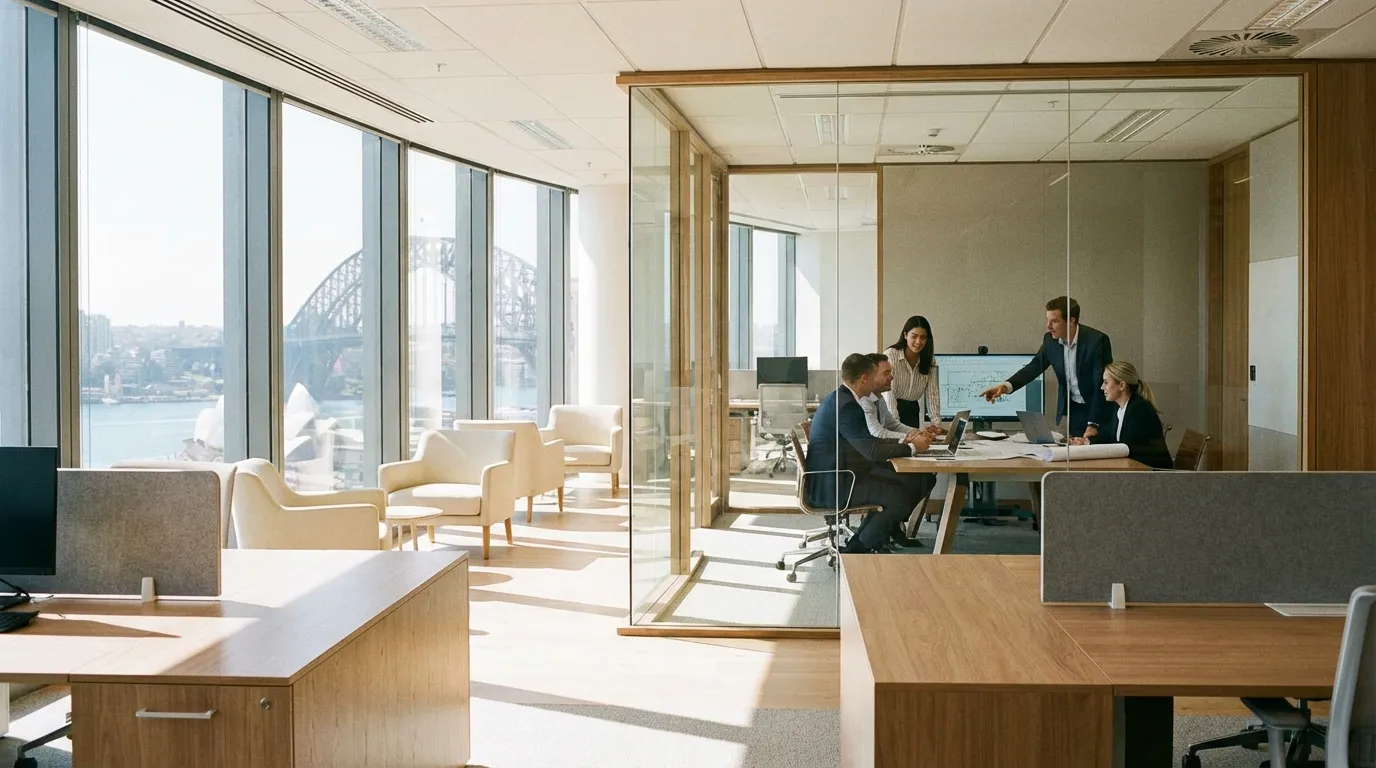
That exact pattern is why more Sydney businesses are choosing a single contract for both design and construction. Often called office design and build, this approach puts designers and builders into one organised team. One agreement. One clear point of responsibility. Fewer gaps between parties, which usually makes things smoother.
For business owners and property managers, this approach often lowers risk across the project. Budget and program risks are easier to manage. Compliance is more straightforward. Disruption is also reduced, which matters when staff or tenants still need to use the space every day.
This guide explains how integrated office design and build works and why it’s growing fast in commercial construction. It also looks at how it helps Sydney offices get better results with fewer surprises, including real data, common mistakes, and situations where this approach makes sense (and where it probably doesn’t).
What Integrated Design and Construction Really Means
The key idea here is simple: integrated design and construction means one company handles the whole job. Office interior design, approvals, construction, and final handover all sit under one contract. That setup is easy to understand, and in practice it often makes life easier. Instead of hiring a designer first and then going out to builders later, everything is handled together. Decisions are usually clearer, and with fewer handovers, there tend to be fewer problems along the way.
This setup also closes the gaps where issues often start. Designers and builders work together from the very beginning, so costs are checked early instead of midway through the build. Build issues are often sorted out before work starts on site, which saves time and reduces stress later. From experience, that early teamwork is what often leads to better results.
Research shows this approach is now common. By 2025, design-build makes up about 47 percent of global construction spending, and it keeps growing because it’s generally dependable. Transport and building studies also show integrated projects are delivered around 14 percent faster than traditional models, which matters when deadlines are tight.
| Metric | Traditional Model | Integrated Design & Build |
|---|---|---|
| Average delivery speed | Baseline | ~14% faster |
| Change order range | 10, 20% common | 3, 8% typical |
| Single point of accountability | No | Yes |
For Sydney offices, speed is rarely optional. Many projects run in active buildings, with limited space and people still working nearby. Delays quickly affect rent, productivity, and relationships. Integrated commercial construction helps reduce those risks by keeping everyone focused on the same goal from day one.
One Contract Means Fewer Surprises and Clear Accountability in Design and Construction
One of the biggest risks in an office renovation is unclear responsibility, and it happens more often than people expect. When design and construction are handled by separate teams, problems often fall into frustrating grey areas. Is it a design mistake or a construction issue? And who’s actually paying to fix it? That back‑and‑forth can slow things down and add stress that no one planned for.
With an office design and build approach, that confusion usually disappears. There’s one contract and one team clearly responsible. Simple. That clarity alone often cuts down on arguments that stall progress and quietly drive costs up over time. You’ll likely see fewer email chains that go nowhere (always a good thing) and fewer delays overall.
Decisions also tend to happen faster. Builders are involved early and can share practical input that helps. They point out long‑lead items and compliance risks upfront, before they turn into on‑site delays. Designers can then adjust layouts and materials to match real site conditions, not just what looks good on drawings, which often matters more than people think.
This setup is especially useful for projects that need approvals or services upgrades. Sydney councils and strata managers often want quick, clear answers, and it’s usually easier when one team handles it instead of juggling disconnected consultants and endless emails.
We’ve written more about this in our guide on office construction management for stress-free fitouts, with a practical example of how integrated management can ease day‑to‑day pressure for clients.
Additionally, see our related piece on Healthcare Office Fitouts Sydney: Key Design Requirements to understand how integrated design and construction can support specialised compliance needs.
Why Market Conditions Make Integrated Delivery Even More Important
The construction market is changing, and most teams have likely felt it already. Growth is slowing, costs keep shifting, and finding skilled labour is still tough. That mix often raises risk on commercial projects, especially on busy sites where pressure can build quickly.
The consensus is that overall spending on nonresidential buildings not adjusted for inflation will increase only 1.7% this year and grow very modestly to just 2.0% next year.
When growth slows, certainty matters more, especially during early budgeting and approvals. Integrated design and construction can bring costs forward, so teams are less likely to rush once key decisions are locked in, which happens more often than people expect. Less guesswork makes a real difference.
JLL also notes that the post‑pandemic construction surge is easing. Margins are tighter, and there’s usually little room for rework or late changes. Fewer second chances.
The construction industry’s incredibly strong performance in 2024 will be followed by a more modest 2025.
For Sydney office projects, this often comes down to a simple point: fewer surprises usually lead to better outcomes, especially when teams work together from day one.
Better Outcomes for Hybrid, Sustainable, and Tech-Ready Offices
Modern offices are more complex than they used to be. Hybrid work is now standard, sustainability targets keep climbing, and smart tech is expected in most spaces. Accessibility rules also can’t be ignored, with very little room to move. When these factors aren’t addressed early, they often come back later as unplanned costs and rushed fixes, which is when projects start to feel stressful.
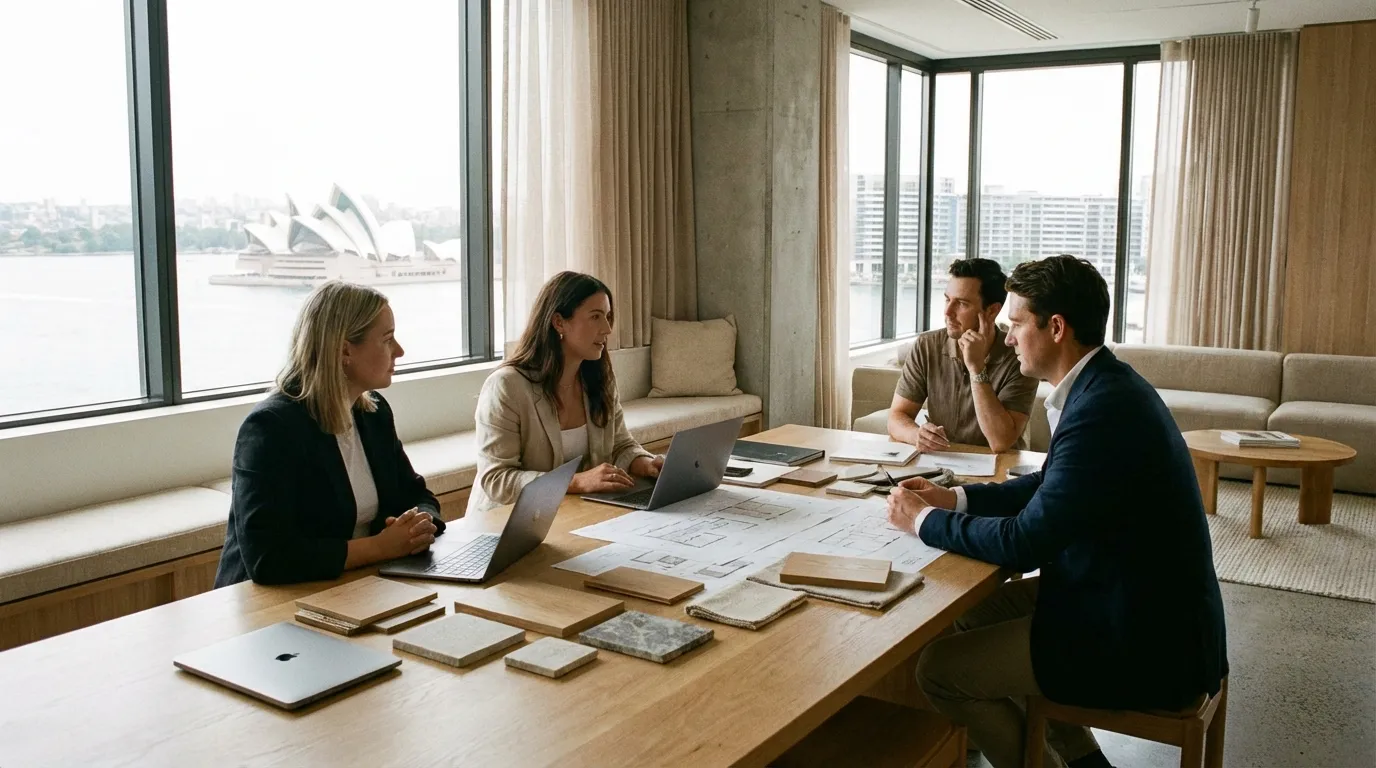
Integrated office design and build is one way teams handle these pressures. Designers and builders work closely on power, data, lighting, and layouts from the same starting point. Sustainability features are budgeted from the beginning, which helps avoid awkward cost surprises later. Accessibility is built in from day one instead of being tacked on at the end, and that usually makes a real difference. Shortcuts aren’t part of the process.
Australian workplace specialists often say early coordination supports hybrid work, ESG goals, and dependable tech. In most projects, that early groundwork is hard to replace.
For teams planning flexible workspaces, more detail is available in the article on office layout design for high-performance hybrid teams in Sydney, which explains why early planning matters.
The same approach also supports sustainable choices. Materials, joinery, and building services are chosen with installation in mind, which often cuts waste and improves lifecycle performance. This is covered in more depth in the guide to sustainable office fitouts in Sydney.
You can also explore 2026 Office Technology Forecast: Smart Workplace Trends for insights into how future-ready offices align with integrated design and construction planning.
Common Mistakes That Increase Risk in Traditional Projects
Office projects often get into trouble for fairly predictable reasons, and most teams have dealt with at least a few of them before. These familiar patterns help explain why integrated delivery often performs better in real-world conditions, where budgets and limits are very real, not theoretical.
One common issue is locking in the design before real costs are clear. This happens a lot. Builders price the work later, budgets rise fast, and projects end up going through redesigns and schedule delays more than once.
Coordination between consultants is another weak spot. It’s rarely smooth. Building services often clash early without being picked up, while fire and accessibility problems tend to show up late, when fixes cost much more.
Occupied buildings add another level of risk. In busy offices, missing early builder input means staging plans often fall apart, causing noise issues, access problems, and unhappy tenants.
Integrated design and construction usually handles these situations in a different way. Risks show up earlier, and one team stays responsible for fixing them instead of passing them along.
When Design and Build Makes the Most Sense
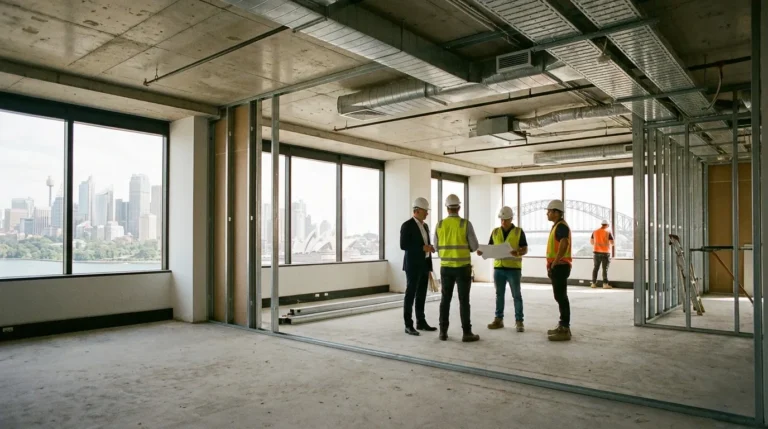
Occupied buildings are where integrated delivery often shows its value. Planning and delivery sit together, which usually cuts disruption, and staged work helps businesses stay open. Teams work around people instead of forcing shutdowns.
The same approach works for office refurbishments and make-good works when timelines are tight and approvals get messy. With one team carrying it through, decisions land faster and the back and forth drops.
Property managers see the upside too. A single contract can simplify reporting, track costs as issues come up, and keep compliance documents in one place.
This is covered in our step-by-step guide on planning an office renovation in Sydney, and further discussed in Office Refurbishment Services for Sydney Property Managers.
Questions People Ask
Office design and build means one company handles design, approvals, construction, and delivery under a single contract, which usually helps overall. When teams work together, communication is smoother in practice and this often lowers risk in most cases too.
Is integrated design and construction more expensive?
Integrated projects often save money by reducing change orders and rework during construction. Pricing can look similar at first glance, so it’s usually not more expensive in the end.
Does this model work for small office renovations?
Yes, it often works. Small office fitouts still get accountability and cost control, especially in Sydney CBD buildings, and it stays simple for you.
How does this approach reduce delays?
And teams plan and build together early, which often helps in real work. By finding problems sooner and keeping on-site schedules realistic, surprises happen, but they’re usually manageable.
Is design and build suitable for sustainable offices?
Absolutely, yes. When planned early (from day one), sustainability tends to fit better, helping teams match materials, build methods, and services to hit ESG goals (you’ll see it).
The Bottom Line for Sydney Office Projects
For many Sydney office projects, real relief shows up when design and construction sit under one contract. Clear ownership and faster decisions often ease the pressure that builds when too many people are involved. This matters because projects usually start to slip when things are split up. Extra contracts, handovers, and unspoken assumptions can pile up faster than expected, and stress tends to come with them.
An integrated approach helps remove those pressure points. It cuts down on mixed messages and keeps responsibility clear, so businesses aren’t managing designers, builders, and consultants as separate groups. In real terms, that often leads to fewer gaps and fewer surprises along the way.
For commercial property managers and business owners, this setup also makes reporting, compliance, budgets, and timelines easier to handle. The people working in the space usually notice less day‑to‑day disruption, which, in my view, leads to smoother workdays and fewer complaints. Small issues don’t build up as quickly.
Planning an office renovation or a full fitout? An integrated design and build approach is no longer just a trend. It’s proven that keeping things clear and limiting moving parts usually delivers more consistent results.