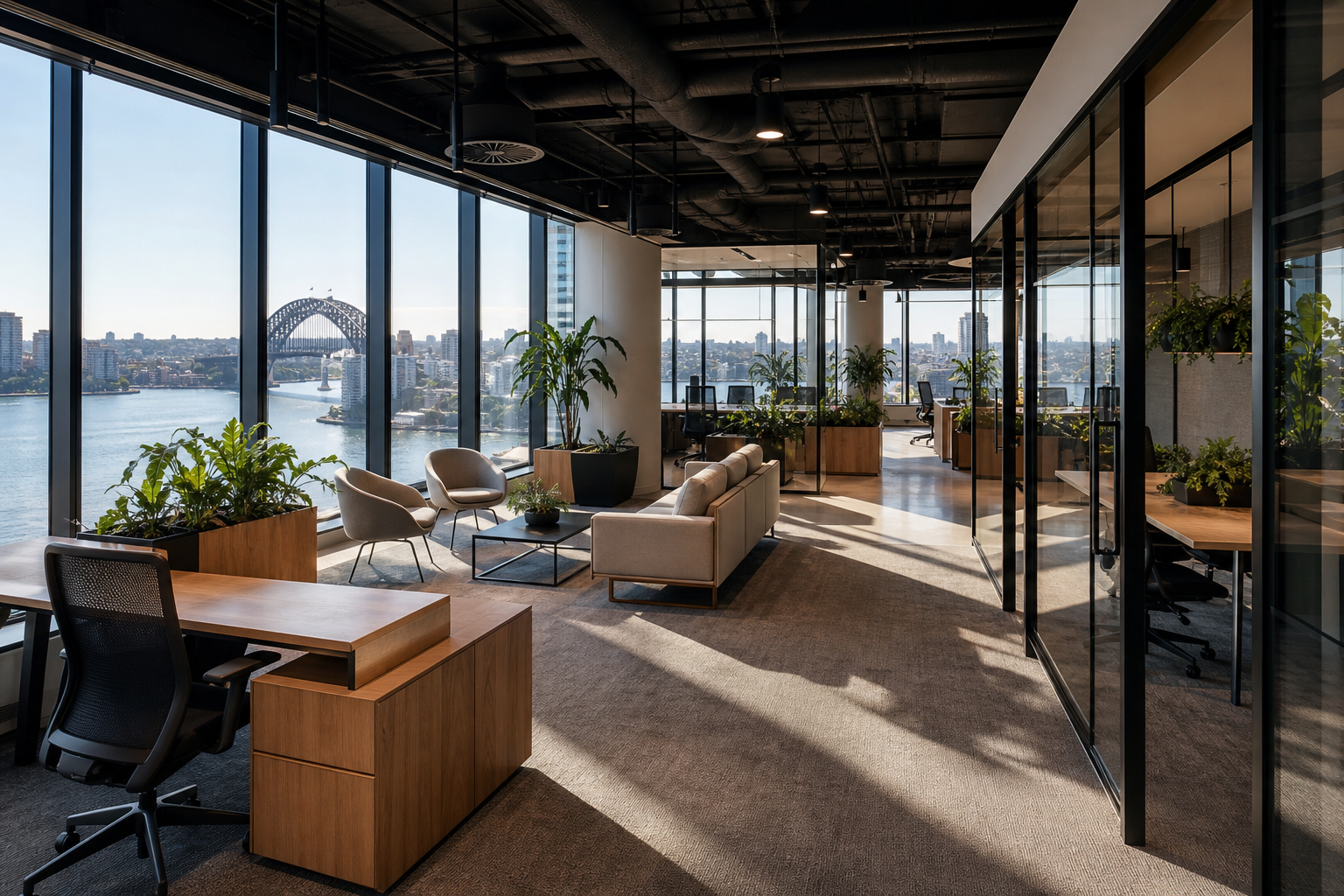
Office Fitout Sydney: Plan Your 2026 Project
Last updated:
An office fitout Sydney project transforms a bare or outdated commercial space into a functional, brand-aligned workplace that supports how your team actually works. In 2026, a well-planned office fitout in Sydney typically costs between $800 and $3,500 per square metre, takes 12 to 30 weeks from brief to move-in, and must comply with the National Construction Code (NCC) 2025 provisions now being adopted across New South Wales. Whether you are leasing a new tenancy in Barangaroo or refreshing an existing CBD suite, this guide breaks the entire process into clear, actionable steps so you can deliver on time and on budget.
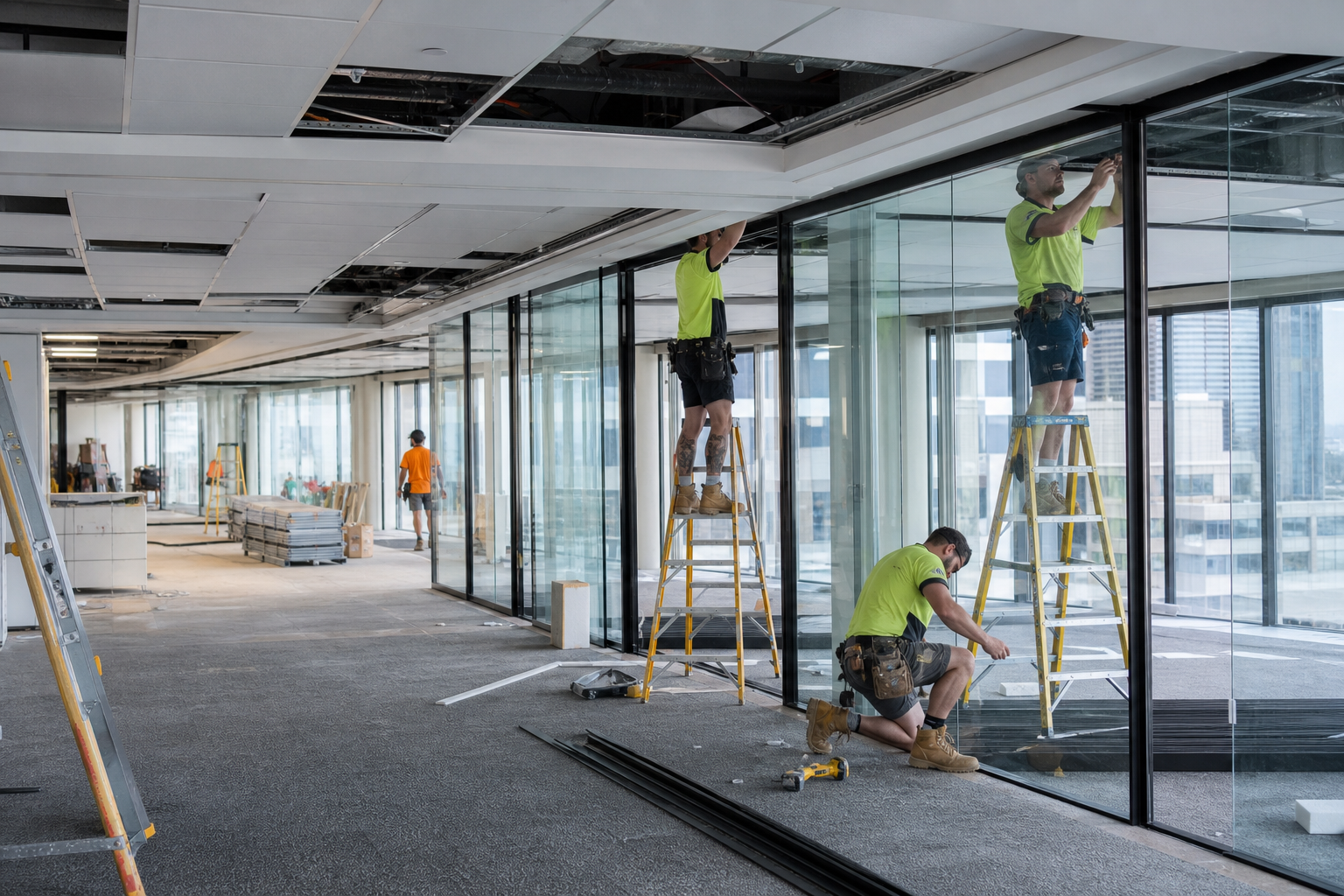
Why 2026 Is a Pivotal Year for Your Office Fitout Sydney Project
Several converging factors make 2026 one of the most significant years for commercial fitouts across Greater Sydney.
NCC 2025 Adoption
The National Construction Code 2025 was published for preview in February 2026 and states may adopt the updated provisions from 1 May 2026. Key changes relevant to office fitouts include stronger commercial energy-efficiency requirements, mandatory on-site solar photovoltaic provisions for certain building classes, improved lighting-control mandates, and enhanced carpark fire-safety measures. Starting your office fitout Sydney project now means designing for compliance from day one rather than retrofitting later.
Hybrid Work as the Default
The hybrid workplace model is no longer experimental. In 2026, most Sydney employers operate with a blend of on-site and remote days. Fitout designs need activity-based zones — quiet focus pods, collaboration hubs, video-call booths, and touchdown stations — rather than rows of permanent desks. Designing for hybrid use from the outset avoids expensive reconfiguration within 12 months of move-in.
Rising Construction Input Costs
Timber, steel, and glazing costs have continued to climb through 2025–2026. Locking in your office fitout Sydney scope and procurement schedule early gives you more leverage with suppliers and reduces the risk of mid-project cost escalation.
The Office Fitout Sydney Process: Step by Step
Every successful commercial fitout follows a structured process. Understanding each phase helps you set realistic expectations and hold your fitout partner accountable.
Phase 1 — Needs Analysis and Brief (Weeks 1–3)
Before any design work begins, a thorough needs analysis establishes the foundation. This involves:
- Headcount mapping — current team size, projected growth over the lease term, and peak-day versus average-day attendance.
- Work-mode audit — identifying which roles require dedicated desks, which are hybrid, and which are fully remote.
- Adjacency planning — determining which teams need to sit together and which shared amenities (kitchens, print hubs, meeting rooms) serve the whole floor.
- Brand and culture alignment — translating company values into spatial design cues such as colour, materiality, and openness.
The output is a fitout brief that every subsequent decision references. Skipping this step is the number-one reason Sydney fitout projects run over budget.
Phase 2 — Concept Design and Space Planning (Weeks 3–6)
Your fitout partner translates the brief into concept layouts. Expect two to three design options showing furniture placement, partition locations, circulation paths, and zone allocations. Good space planning follows the Australian Standard AS 1428.1 for accessibility and leaves a minimum 1,200 mm clear corridor width in primary circulation routes.
At this stage, 3D renders and material mood boards help stakeholders visualise the finished space. Requesting renders early avoids costly changes once construction starts.
Phase 3 — Detailed Design and Documentation (Weeks 6–10)
Detailed drawings cover electrical, data, HVAC modifications, fire services, and joinery. A registered certifier reviews the plans against the Building Code of Australia (BCA), which forms Volume One and Volume Two of the NCC. If your fitout involves changes to essential fire-safety measures, a fire-engineering report may be required.
This phase also produces a bill of quantities (BoQ) that enables accurate cost comparison between fitout contractors.
Phase 4 — Approvals and Procurement (Weeks 8–14)
Depending on the scope, your office fitout Sydney project may require:
- Landlord consent — Almost always required under a commercial lease. Submit fitout plans, contractor details, and insurance certificates. Allow two to four weeks for review.
- Council development approval (DA) — Only needed for external changes, heritage-listed buildings, or change of use. Most internal office fitouts are classified as exempt or complying development.
- Certifier approval — A private certifier or council certifier issues a Construction Certificate (CC) before work begins and an Occupation Certificate (OC) upon completion.
While approvals are being processed, your fitout company procures long-lead items — custom joinery, imported furniture, specialty glass — to keep the programme on track.
Phase 5 — Construction and Installation (Weeks 12–22)
Construction typically follows this sequence:
- Strip-out and demolition of existing partitions, ceiling tiles, and floor coverings.
- First-fix services — electrical conduit, data cabling, plumbing rough-in, HVAC ductwork modifications.
- Partition framing and plasterboard installation.
- Glazing installation for meeting rooms and office partitions.
- Second-fix services — power points, light fittings, data outlets, fire detection.
- Joinery, cabinetry, and kitchen installation.
- Floor coverings — carpet tiles, vinyl plank, polished concrete.
- Painting and finishing.
- Furniture delivery and installation.
- IT and AV commissioning.
A competent project manager runs weekly site meetings, tracks programme milestones, and manages variations before they become disputes.
Phase 6 — Defects, Handover and Move-In (Weeks 22–26)
Before handover, a thorough defects inspection identifies any items that do not meet specification. Common defects include paint touch-ups, alignment issues on joinery, and incomplete data patching. Your fitout partner should rectify all defects before you sign practical completion and take occupation.
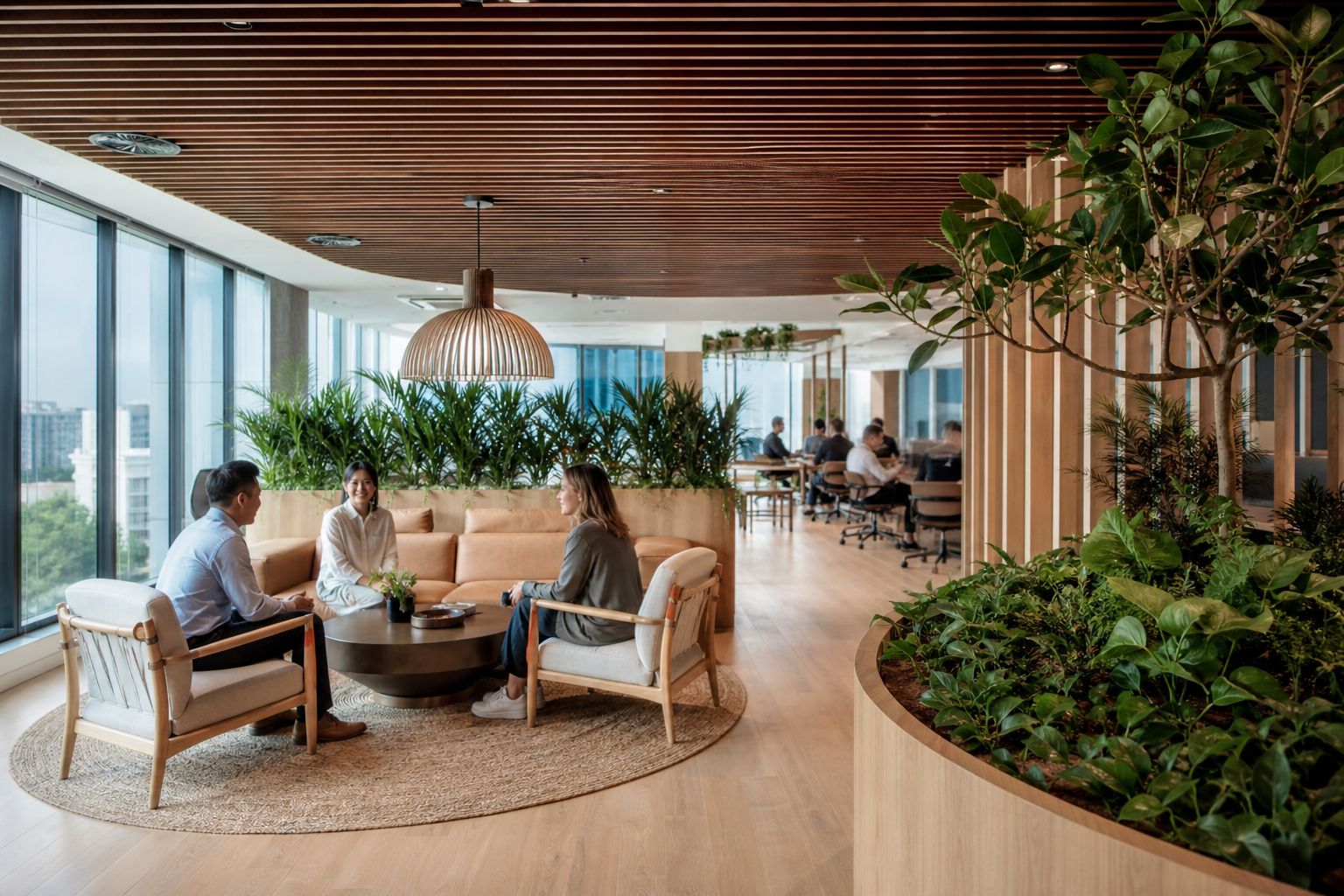
Office Fitout Sydney Costs: What to Budget in 2026
Cost is the question every business asks first. Here is a realistic breakdown based on current Sydney market data.
Cost Per Square Metre Ranges
| Fitout Level | Cost Per m² (2026) | Typical Inclusions |
|---|---|---|
| Basic / Budget | $600 – $900 | Paint, carpet tiles, basic lighting, workstations, minimal partitions |
| Mid-Range | $900 – $1,800 | Glass partitions, custom joinery, feature lighting, breakout area, AV-equipped meeting rooms |
| Premium / High-End | $1,800 – $3,500+ | Bespoke joinery, engineered stone, acoustic treatment, smart lighting, branded reception, high-spec AV |
According to JLL’s 2025 Australian Office Fitout Cost Guide, the national average for a moderate CBD fitout sits around $3,220 per square metre — a figure that includes design fees, construction, furniture, and project management. Sydney’s CBD typically trends 10–15% above the national average due to higher base-building access costs and after-hours work premiums in multi-tenancy towers.
Hidden Costs to Watch
Several line items catch businesses off guard:
- Make-good provisions — Your lease may require you to restore the premises to base-building condition at lease end. Budget 8–12% of your fitout cost as a make-good reserve.
- After-hours construction premiums — Many Sydney CBD buildings restrict noisy work to evenings and weekends, attracting 15–30% labour surcharges.
- BCA compliance upgrades — Older buildings may require fire-services upgrades, asbestos removal, or accessibility improvements that become your cost if triggered by the fitout scope.
- IT and AV infrastructure — Structured cabling, wireless access points, and video-conferencing hardware are often budgeted separately from the fitout but must be coordinated closely.
Choosing the Right Office Fitout Sydney Partner
Your fitout partner determines whether the project runs smoothly or becomes a source of stress. Here is what to evaluate.
Design-and-Construct vs Separate Appointments
A design-and-construct (D&C) model appoints a single firm to handle design, documentation, and construction. This approach offers a single point of accountability, faster programme delivery, and typically 10–15% cost savings through value engineering. The alternative — appointing a designer separately from a builder — gives you more design freedom but introduces coordination risk and longer timelines.
For most office fitout Sydney projects under 1,000 square metres, D&C delivers the best balance of cost, speed, and quality. Office Fitouts Sydney operates on a full-service D&C model, managing every stage from concept through to move-in.
What to Look for in a Fitout Company
- Relevant portfolio — Ask for completed projects of similar size, industry, and fitout level. A company that excels at 50-person tech fitouts may not be the right choice for a 200-person law firm.
- Licensed and insured — Confirm a current NSW builder’s licence, public liability insurance (minimum $20 million), and workers’ compensation cover.
- Transparent pricing — Request a line-item BoQ rather than a lump-sum quote. Transparency at tender stage correlates strongly with fewer variations during construction.
- Dedicated project manager — Your day-to-day contact should be an experienced PM, not a salesperson. Ask who will run the project and confirm their availability.
- Post-completion support — A 12-month defects liability period is standard. Confirm response times and the process for lodging defect claims.
Office Fitout Sydney Design Trends for 2026
Design trends are not just aesthetics — they reflect how people work, what regulations demand, and how technology is evolving. Here are the trends shaping Sydney fitouts this year.
Activity-Based Working (ABW) Zones
ABW layouts assign space by task, not by person. A typical 500 m² Sydney fitout in 2026 might include a quiet zone (30%), collaborative zone (35%), social zone (15%), and meeting zone (20%). The ratio shifts based on the organisation’s hybrid attendance patterns.
Resimercial Design
Resimercial — the blend of residential warmth with commercial durability — continues to gain traction. Think timber-look vinyl plank flooring, soft furnishings in breakout areas, pendant lighting, and indoor plants. The goal is to make the office feel inviting enough that employees choose to come in on non-mandatory days.
Biophilic Elements
Integrating natural elements — living green walls, natural timber, stone feature walls, maximised daylight — is backed by research showing up to 15% higher productivity and 6% greater creativity in biophilic workplaces. In Sydney, where harbour and city views are a premium asset, fitout designs that frame external views while managing glare create high-impact spaces.
Acoustic Planning
Open-plan fatigue is real. The 2026 response is deliberate acoustic zoning: high-NRC ceiling tiles in focus areas, acoustic felt panels on partition walls, sound-masking systems in open zones, and enclosed phone pods for private calls. Good acoustic design reduces distraction complaints by up to 50%.
Sustainability and NABERS Alignment
Tenants are increasingly asked to demonstrate sustainability credentials. Choosing low-VOC paints, FSC-certified timber, LED lighting with daylight sensors, and energy-efficient HVAC modifications can contribute to a higher NABERS tenancy rating. With NCC 2025 mandating improved energy efficiency, designing sustainably from day one avoids future compliance costs.
Common Office Fitout Mistakes to Avoid
Experienced fitout professionals see the same mistakes repeated across Sydney projects. Avoiding these pitfalls saves time, money, and frustration.
1. Underestimating the Brief
Jumping straight to design without a thorough needs analysis leads to a space that looks good but does not support how teams work. Invest three weeks in the brief — it will save you three months of rework.
2. Ignoring the Lease
Your lease dictates what you can and cannot do. Check for restrictions on structural modifications, signage, after-hours access, and make-good obligations before committing to a design. Some Sydney leases cap fitout expenditure or require landlord-nominated contractors for fire and mechanical services.
3. Forgetting Future Flexibility
A fitout designed for today’s headcount with no expansion capacity becomes obsolete when the business grows. Modular furniture systems, demountable partitions, and pre-wired data zones provide future flexibility without major capital outlay.
4. Underbudgeting IT and AV
Technology infrastructure is the backbone of any modern office. Budget $150–$350 per square metre for structured cabling, wireless networks, video conferencing, and digital signage. Coordinating IT with the fitout programme avoids costly post-construction cable runs.
5. Choosing on Price Alone
The cheapest quote often leads to the most expensive outcome. Variations, delays, and poor workmanship erode any initial saving. Evaluate fitout partners on capability, track record, and transparency — not just the bottom line.
Explore More from Office Fitouts Sydney
If you are comparing providers, our detailed breakdown of the best office fitouts in Sydney evaluates the top firms across design capability, project management, and value for money. For cost-specific guidance, read our analysis of office fitout costs in Sydney with real pricing data and budget-control strategies.
Frequently Asked Questions
How much does an office fitout cost in Sydney in 2026?
A basic office fitout in Sydney costs $600–$900 per square metre, a mid-range fitout $900–$1,800/m², and a premium fitout $1,800–$3,500+/m². The total depends on floor area, design complexity, material selections, and base-building condition. Budget an additional 8–12% for make-good provisions and 5–10% for contingency.
How long does an office fitout take in Sydney?
A typical office fitout Sydney project takes 12–30 weeks from brief to move-in. Small fitouts under 200 m² can be completed in 8–12 weeks. Larger projects over 1,000 m² may extend to 30+ weeks, particularly if council approvals or complex base-building modifications are required.
Do I need council approval for an office fitout in Sydney?
Most internal office fitouts in Sydney do not require council development approval (DA). They are classified as exempt or complying development under the NSW planning framework. However, you will need a Construction Certificate from a private or council certifier, and landlord consent is almost always required under your lease.
What is included in a turnkey office fitout?
A turnkey office fitout covers everything from initial design and space planning through construction, furniture supply and installation, IT cabling, and final handover. The term means you receive a ready-to-occupy workspace — you simply turn the key and start working. This approach suits businesses that want a single point of contact managing the entire project.
Should I choose design-and-construct or separate designer and builder?
Design-and-construct (D&C) offers faster delivery, single-point accountability, and typically 10–15% cost savings through integrated value engineering. Separate appointments give more design freedom but introduce coordination complexity. For most office fitout Sydney projects under 1,000 m², D&C is the recommended approach.
What are the biggest office fitout trends in Sydney for 2026?
The leading trends are activity-based working zones designed for hybrid attendance, resimercial styling that blends residential warmth with commercial durability, biophilic design with living walls and natural materials, deliberate acoustic planning, and sustainability-focused material selections aligned with NCC 2025 energy-efficiency requirements.
How do I choose the right office fitout company in Sydney?
Evaluate potential partners on relevant portfolio experience, current NSW builder’s licence, transparent line-item pricing, a dedicated project manager, and a clear defects liability period. Request references from completed projects of similar size and industry. Office Fitouts Sydney offers a full design-and-construct service with transparent pricing and dedicated project management for every engagement.
Make Office Fitouts Sydney a preferred source in Google
One click tells Google to surface our articles more often in Top Stories, AI Overviews and AI Mode.