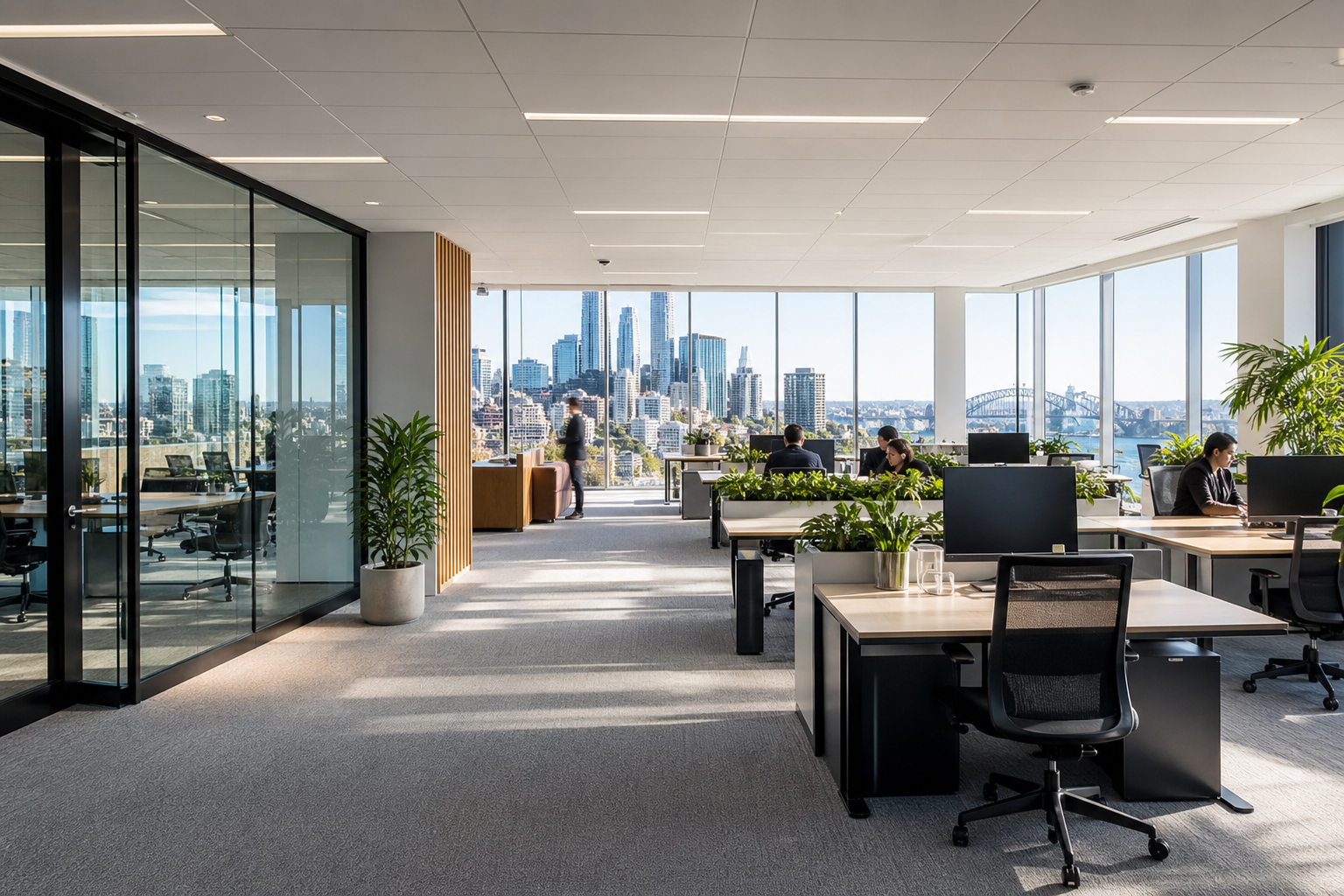
Commercial Office Fitouts Sydney: Expert Guide
Last updated:
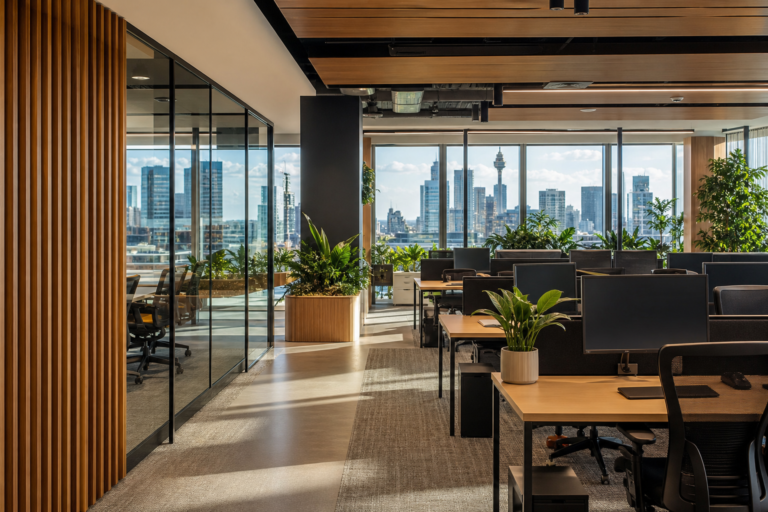
Commercial office fitouts Sydney projects involve the complete transformation of a leased or owned commercial space into a functional, compliant, and brand-aligned workplace. A professional commercial office fitout covers everything from initial space planning and interior design through to construction, mechanical and electrical services, furniture installation, and final handover. In Sydney’s competitive market, businesses invest between $450 and $2,800 per square metre depending on scope, with most mid-range projects running $900 to $1,600 per square metre. Office Fitouts Sydney delivers end-to-end commercial fitout services across the greater Sydney metropolitan area.
Whether you are establishing a new Sydney headquarters, expanding into additional floors, or upgrading an ageing workplace, understanding the full commercial fitout process puts you in a stronger negotiating position with contractors, landlords, and certifiers. This guide explains every phase of a commercial office fitout, the compliance requirements that apply in New South Wales, realistic cost expectations, and the criteria that separate a competent fitout contractor from an exceptional one.
What Makes Commercial Office Fitouts Sydney Different
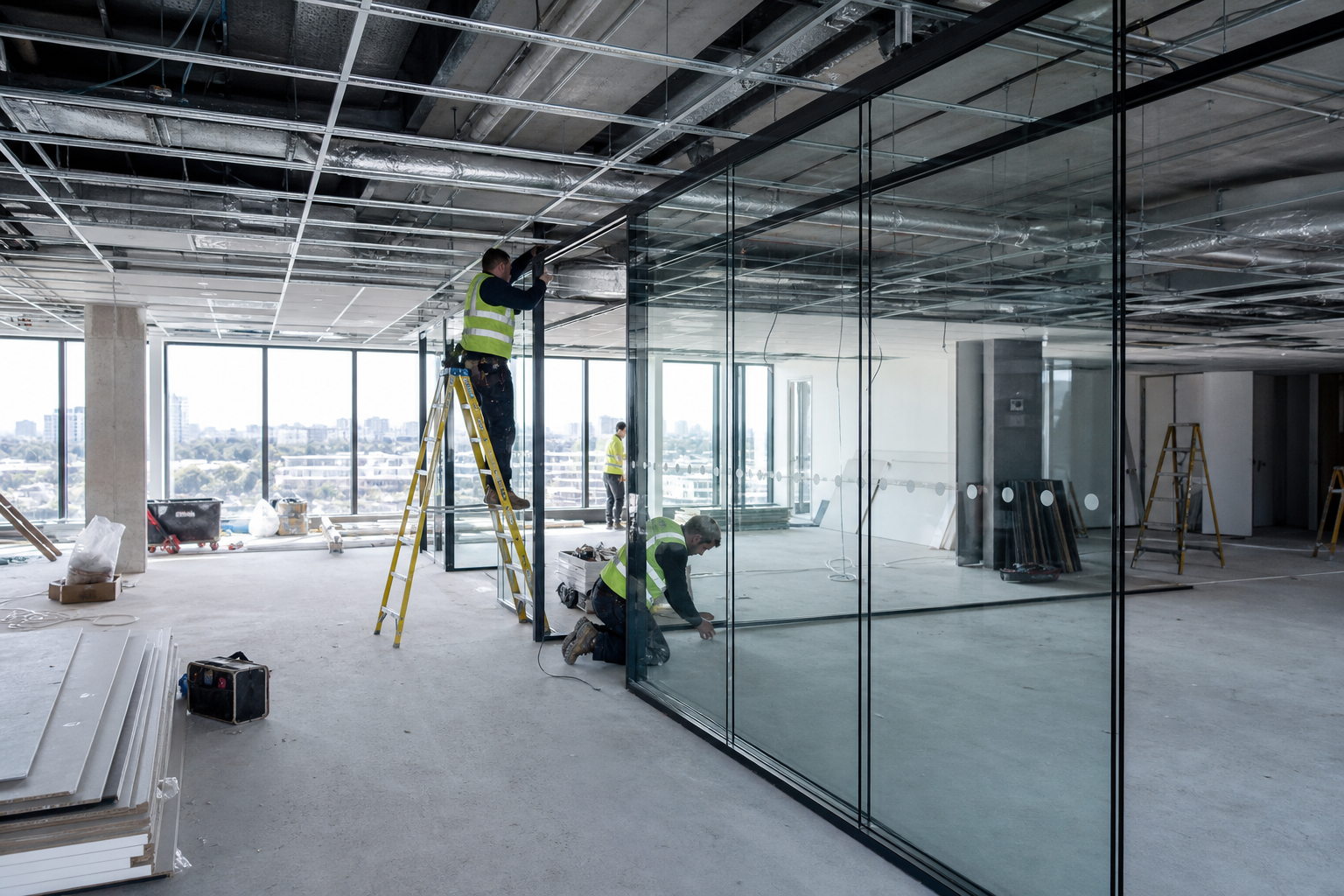
Commercial office fitouts differ from small or residential projects in scale, regulatory complexity, and stakeholder coordination. A 200-square-metre startup fitout may involve a single designer and a handful of trades. A 2,000-square-metre corporate fitout involves structural engineers, mechanical engineers, fire engineers, acoustic consultants, IT integrators, furniture suppliers, and a principal certifier — all coordinating around an occupied building’s operating hours.
In Sydney specifically, commercial fitouts must navigate:
- National Construction Code (NCC) 2025 compliance — fire safety, accessibility (AS 1428.1), ventilation rates, and energy efficiency requirements updated in the latest code cycle
- Local council development applications (DAs) — required for change-of-use scenarios, heritage-listed buildings, or external structural modifications
- Construction Certificates (CCs) — issued by a private certifier or council before any physical works begin
- Occupation Certificates (OCs) — confirming the fitout is safe for occupation upon completion
- Landlord and building management approvals — base building protection, after-hours access, loading dock bookings, and services tie-in protocols
- Work Health and Safety (WHS) obligations — SafeWork NSW compliance for all on-site trades and contractors
These layers of approval and compliance are why commercial office fitouts Sydney require dedicated project management. Without it, timelines blow out, costs escalate, and handover delays create lease liability exposure.
The Commercial Office Fitout Process: Six Phases
A well-managed commercial fitout follows a structured sequence. Skipping phases or compressing them too aggressively is where most projects go wrong. Here is the standard six-phase process used by experienced fitout contractors in Sydney.
Phase 1: Brief and Scope Definition
Every commercial fitout starts with a detailed brief. This document captures the business’s operational requirements, headcount projections, departmental adjacencies, technology needs, brand standards, and budget parameters. A thorough brief typically takes two to four weeks to develop for a mid-size project.
Key decisions made at this stage include:
- Open plan versus enclosed office ratios
- Meeting room counts and sizes (huddle rooms, boardrooms, town halls)
- Collaboration zones, quiet zones, and focus pods
- Reception and client-facing areas
- Kitchen, breakout, and wellness amenities
- IT and AV infrastructure requirements
- Sustainability and AASB S2 compliance targets
The brief becomes the contract backbone. Every cost estimate, design decision, and construction scope traces back to it.
Phase 2: Design Development
The design phase translates the brief into drawings. For commercial fitouts, this typically involves three stages: concept design, design development, and construction documentation.
Concept design establishes the spatial layout, circulation paths, and the overall aesthetic direction. Mood boards, 3D renders, and test-fit plans help stakeholders visualise the end result before committing to detailed documentation.
Design development refines the concept into coordinated drawings covering partitioning, ceiling layouts, lighting, mechanical services, electrical layouts, and furniture plans. Material and finish selections happen here.
Construction documentation produces the drawings and specifications that contractors price against and build from. Incomplete documentation is the single most common cause of cost blowouts on commercial fitouts in Sydney.
Phase 3: Approvals and Certification
Before construction begins, the fitout must secure the necessary approvals. In NSW, this means:
- Landlord approval — reviewing the design against the lease’s fitout guide and base building specifications
- Construction Certificate (CC) — issued by a registered certifier confirming NCC compliance
- Development Application (DA) — only if the fitout involves change of use, heritage considerations, or external modifications
- Building management approval — coordinating construction logistics, after-hours access, and contractor inductions
Approval timelines in Sydney range from two weeks for straightforward CCs to eight or more weeks when a DA is required. Experienced fitout companies lodge documentation early and manage certifier relationships proactively to avoid bottlenecks.
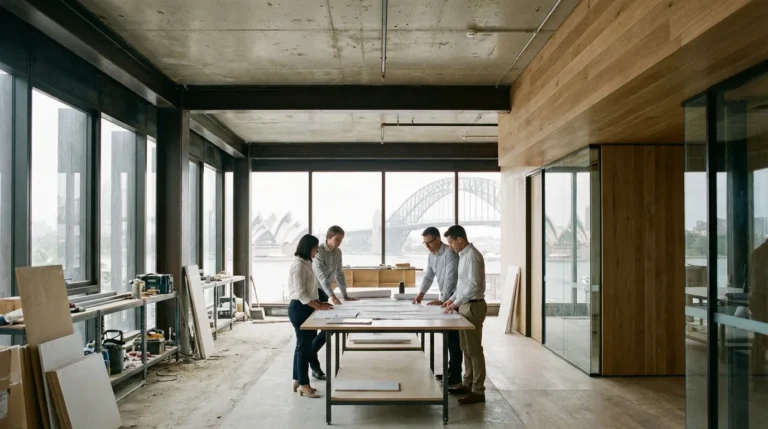
Phase 4: Construction and Fit Out
The construction phase is where the space physically transforms. A typical commercial office fitout in Sydney follows this trade sequence:
- Demolition and strip-out of existing fitout
- Mechanical, electrical, and plumbing (MEP) rough-in
- Fire services installation and modifications
- Partitioning — plasterboard, glass, or demountable systems
- Ceiling grid and tile installation
- Joinery fabrication and installation
- Painting and wall finishes
- Floor coverings — carpet tile, vinyl plank, polished concrete
- Second-fix electrical — lighting, power, data
- IT and AV infrastructure installation
- Furniture delivery and installation
- Final clean and defect inspection
For a mid-range commercial fitout of 500 to 1,000 square metres, the construction phase typically runs eight to fourteen weeks. Larger or more complex projects can extend to twenty weeks or more.
Phase 5: Handover and Certification
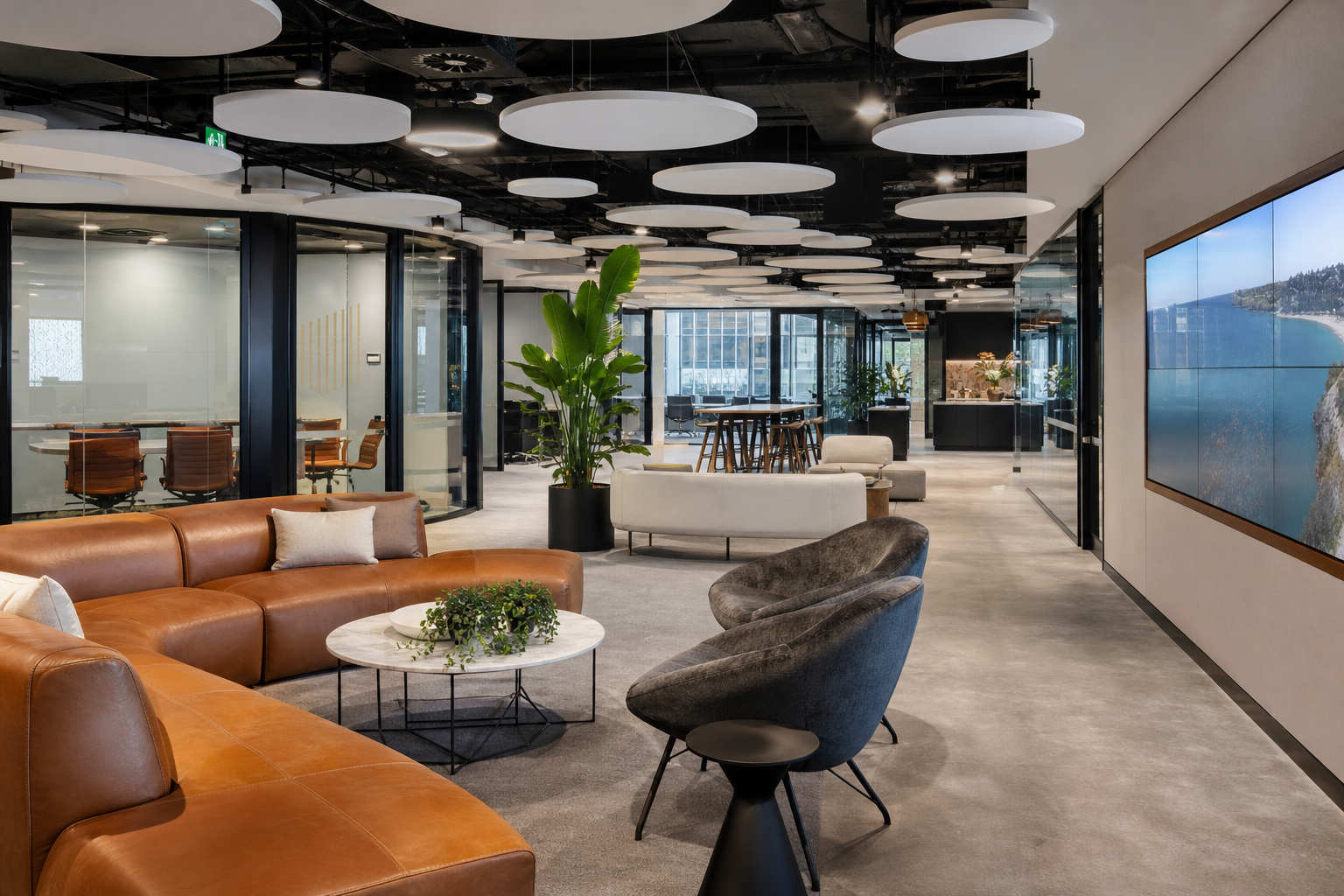
Before occupation, the fitout must pass a series of inspections and obtain an Occupation Certificate. This confirms the completed works comply with the approved Construction Certificate and meet all NCC requirements.
The handover process includes:
- Defect walk-through and rectification
- Fire safety certification and essential services sign-off
- Mechanical commissioning reports
- As-built drawings and operations manuals
- Warranty documentation for all installed systems
A professional fitout contractor manages this entire handover sequence, ensuring the business can move in on schedule without compliance gaps.
Phase 6: Post-Occupancy Support
The best commercial fitout companies do not disappear after handover. Post-occupancy support includes defect liability management (typically twelve months), furniture warranty coordination, and minor adjustment works as the team settles into the new space.
Commercial Office Fitouts Sydney: Cost Breakdown
Fitout costs in Sydney vary significantly based on scope, location, and finish quality. Based on current 2026 market data, here are indicative cost ranges for commercial office fitouts in Sydney:
- Basic fitout: $450 – $900 per sqm — paint, carpet, minor partitioning, basic lighting upgrades
- Mid-range fitout: $900 – $1,600 per sqm — custom joinery, new partitioning, upgraded mechanical and electrical services, data cabling
- Premium fitout: $1,600 – $2,800 per sqm — high-end finishes, bespoke joinery, full mechanical redesign, integrated AV, acoustic treatment
For a 500-square-metre mid-range commercial fitout, total construction costs typically fall between $450,000 and $800,000, excluding design fees (usually 8–12% of construction cost), furniture ($800–$2,500 per workstation), and IT infrastructure.
What Drives Cost Variation
Several factors push commercial fitout costs up or down in Sydney:
- CBD versus suburban locations — CBD sites have higher logistics costs (loading dock fees, after-hours work requirements, traffic management)
- Base building condition — a warm shell with existing services reduces scope; a cold shell requires full MEP installation
- Ceiling height and floor plate complexity — irregular floor plates and heritage features increase construction difficulty
- Sustainability targets — NABERS or Green Star requirements add specification and documentation costs
- Timeline compression — accelerated programs require overtime and additional trade crews
- Design complexity — bespoke joinery, feature walls, and specialty finishes cost more than standard selections
The most effective way to control costs on a commercial fitout is thorough scope definition before construction begins. Changes made during construction — known as variations — are always more expensive than decisions made during design.
Design-and-Construct: The Preferred Model for Commercial Office Fitouts Sydney
Design-and-construct (D&C) is the dominant delivery model for commercial office fitouts in Sydney. Under this model, a single company manages both the design and construction phases, providing a single point of accountability from concept to completion.
The advantages of D&C for commercial fitouts include:
- Single point of contact — one project manager coordinates design, approvals, and construction
- Cost certainty — the D&C contractor can provide a fixed-price or guaranteed maximum price early in the process
- Faster timelines — overlapping design and construction phases (fast-tracking) compresses the overall program
- Reduced risk — design and construction coordination happens internally, reducing the risk of documentation gaps between separate design and construction teams
- Value engineering — the builder’s knowledge of construction costs informs design decisions in real time, keeping the project within budget
Office Fitouts Sydney operates as a full-service design-and-construct provider, managing every phase of the commercial fitout process under one contract.
Selecting the Right Commercial Fitout Partner in Sydney
Choosing the right fitout company is arguably the most consequential decision in the entire project. Here are the criteria that matter most for commercial-scale work:
Experience with Commercial Scale Projects
A company that excels at 100-square-metre fit outs may not have the project management infrastructure for a 2,000-square-metre corporate fitout. Ask for case studies at a similar scale to your project. Look for experience managing multiple trades simultaneously, coordinating with building management, and delivering within occupied buildings.
In-House Design Capability
Fitout companies with in-house designers can control the design-to-construction handoff. Companies that subcontract design work introduce a coordination layer that increases risk and can slow decision-making.
Transparent Pricing
Request a detailed cost breakdown, not just a lump sum. A reputable commercial fitout contractor will itemise costs by trade, provide allowances for provisional items, and clearly identify exclusions. Beware of artificially low tenders that rely on variations to recover margin.
Proven Compliance Track Record
Ask about their experience with Construction Certificates, Occupation Certificates, and council approvals in Sydney. A contractor who has navigated complex approval scenarios — heritage buildings, change-of-use applications, multi-tenancy coordination — brings significant risk reduction to your project.
Post-Completion Support
Clarify the defect liability period (typically twelve months), warranty arrangements, and responsiveness to post-handover issues. The relationship should not end at handover.
2026 Trends Shaping Commercial Office Fitouts Sydney
Several trends are influencing how commercial fitouts are designed and delivered in Sydney right now:
Activity-Based Working (ABW)
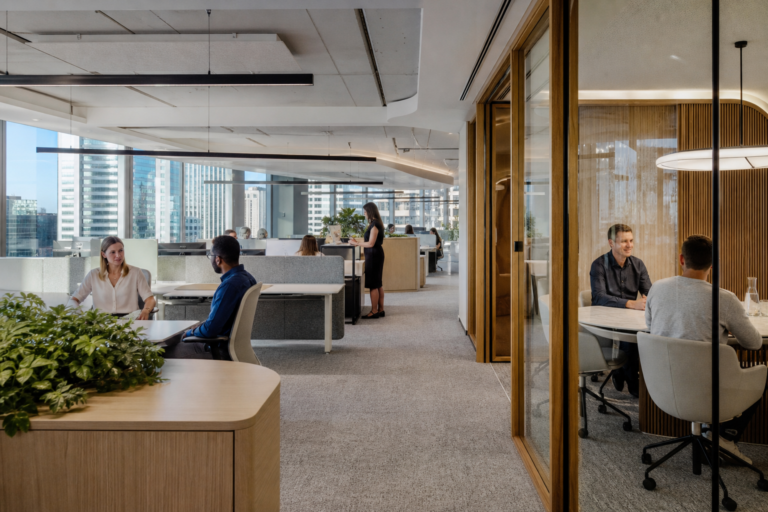
ABW has moved from an experimental concept to an operational framework. Instead of assigned desks, employees choose from a variety of work settings — focus pods, collaboration zones, meeting rooms, and social spaces — based on the task at hand. Commercial fitouts in Sydney are increasingly designed around ABW principles, with desk-to-staff ratios of 0.7:1 or 0.8:1 being common.
Resimercial Design
Resimercial design brings residential-style warmth into commercial workplaces. Soft furnishings, timber finishes, plants, and lounge-style breakout areas create environments that feel less institutional and more inviting. This approach supports talent retention, particularly for businesses competing for knowledge workers in Sydney’s tight labour market.
Acoustic Planning for Full Occupancy
With return-to-office mandates now well-established, fitouts can no longer be designed for partial occupancy. Full-occupancy acoustic planning — including acoustic ceiling tiles, fabric-wrapped wall panels, carpet tile with acoustic backing, and strategic placement of enclosed rooms — is now a baseline requirement for commercial fitouts.
AASB S2 Sustainability Compliance
From 1 January 2026, AASB S2 mandatory climate reporting applies to Group 2 entities. Scope 3 emissions now include tenant fitouts, meaning the materials and construction methods used in your commercial fitout may appear in your 2027 financial disclosures. Low-VOC finishes, recycled content materials, and energy-efficient lighting and mechanical systems are increasingly specified to support compliance.
Neurodiversity-Inclusive Design
Leading commercial fitouts in Sydney now incorporate design features for neurodivergent employees: adjustable lighting levels, texture variety, sensory-friendly quiet rooms, and multiple seating types. This inclusive approach broadens the workspace’s usability and demonstrates genuine commitment to workplace equity.
Common Mistakes in Commercial Office Fitouts
Avoid these pitfalls that consistently derail commercial fitout projects in Sydney:
- Inadequate brief development — rushing the brief leads to scope gaps that surface as expensive variations during construction
- Underestimating approval timelines — council DAs, certifier reviews, and landlord approvals take longer than most businesses expect
- Choosing on price alone — the lowest tender often reflects an incomplete scope or aggressive variation strategy
- Ignoring base building constraints — existing mechanical, structural, and fire systems limit what is possible without significant additional investment
- Late IT and AV coordination — technology infrastructure must be planned during design, not retrofitted during construction
- Skipping post-occupancy evaluation — missing the opportunity to identify and correct issues within the defect liability period
Each of these mistakes is avoidable with experienced project management and a structured fitout process. Office Fitouts Sydney helps clients navigate every stage to prevent costly missteps.
Why Choose Office Fitouts Sydney for Your Commercial Project
Office Fitouts Sydney brings together design, project management, and construction under a single team. For commercial-scale projects, this means:
- Full design-and-construct capability from concept to handover
- Deep experience with Sydney’s approval and certification processes
- Transparent pricing with detailed cost breakdowns
- Proven coordination with building management across Sydney’s major commercial precincts
- Post-handover support including twelve-month defect liability management
For businesses planning a commercial office fitout in Sydney, the first step is a site visit and scope discussion. See how Office Fitouts Sydney compares to other providers and explore how a structured fitout process delivers better outcomes for your team and your budget.
Frequently Asked Questions About Commercial Office Fitouts Sydney
How long does a commercial office fitout take in Sydney?
A typical commercial office fitout in Sydney takes twelve to thirty weeks from brief to move-in, depending on the project’s size and complexity. A 500-square-metre mid-range fitout generally requires eight to fourteen weeks of construction, plus four to eight weeks for design development and approvals. Larger projects exceeding 1,500 square metres can take twenty weeks or more for the construction phase alone.
What permits are needed for a commercial office fitout in Sydney?
At minimum, you need a Construction Certificate (CC) issued by a registered certifier before construction starts, and an Occupation Certificate (OC) before the space can be occupied. If the fitout involves a change of use, heritage-listed buildings, or external structural modifications, a Development Application (DA) to the local council is also required. Landlord and building management approvals run in parallel.
What is the difference between a basic and premium commercial fitout?
A basic commercial fitout ($450–$900/sqm) covers cosmetic updates such as paint, carpet, minor partitioning, and lighting. A premium fitout ($1,600–$2,800/sqm) includes bespoke joinery, full mechanical redesign, acoustic treatment, integrated AV systems, and high-end material finishes. The difference lies in the scope of work, the quality of materials, and the level of trade coordination required.
Do I need council approval for every commercial fitout in Sydney?
No. Most straightforward commercial office fitouts that do not involve a change of use, external structural changes, or heritage-listed properties can proceed with a Construction Certificate alone, without a council Development Application. However, a certifier must confirm NCC compliance regardless of whether a DA is required.
What does design-and-construct mean for commercial fitouts?
Design-and-construct (D&C) means a single company manages both the design and physical construction of your fitout. This model provides a single point of accountability, better cost certainty through integrated value engineering, and faster delivery through overlapping design and construction phases. It is the dominant delivery model for commercial office fitouts in Sydney.
How do I budget for a commercial office fitout in Sydney?
Start with the total area in square metres and apply the relevant cost range: basic ($450–$900/sqm), mid-range ($900–$1,600/sqm), or premium ($1,600–$2,800/sqm). Add design fees (8–12% of construction cost), furniture ($800–$2,500 per workstation), IT infrastructure, and a 10–15% contingency for unforeseen items. For a 500-square-metre mid-range fitout, expect total project costs of $550,000 to $950,000 including all components.
What sustainability requirements apply to commercial fitouts in 2026?
AASB S2 mandatory climate reporting now applies to Group 2 entities from 1 January 2026. Scope 3 emissions include tenant fitouts, so the materials, construction methods, and energy systems you specify may appear in financial disclosures. Low-VOC finishes, recycled content materials, LED lighting, and energy-efficient mechanical systems help meet both compliance requirements and market expectations for responsible commercial fitouts in Sydney.
Make Office Fitouts Sydney a preferred source in Google
One click tells Google to surface our articles more often in Top Stories, AI Overviews and AI Mode.