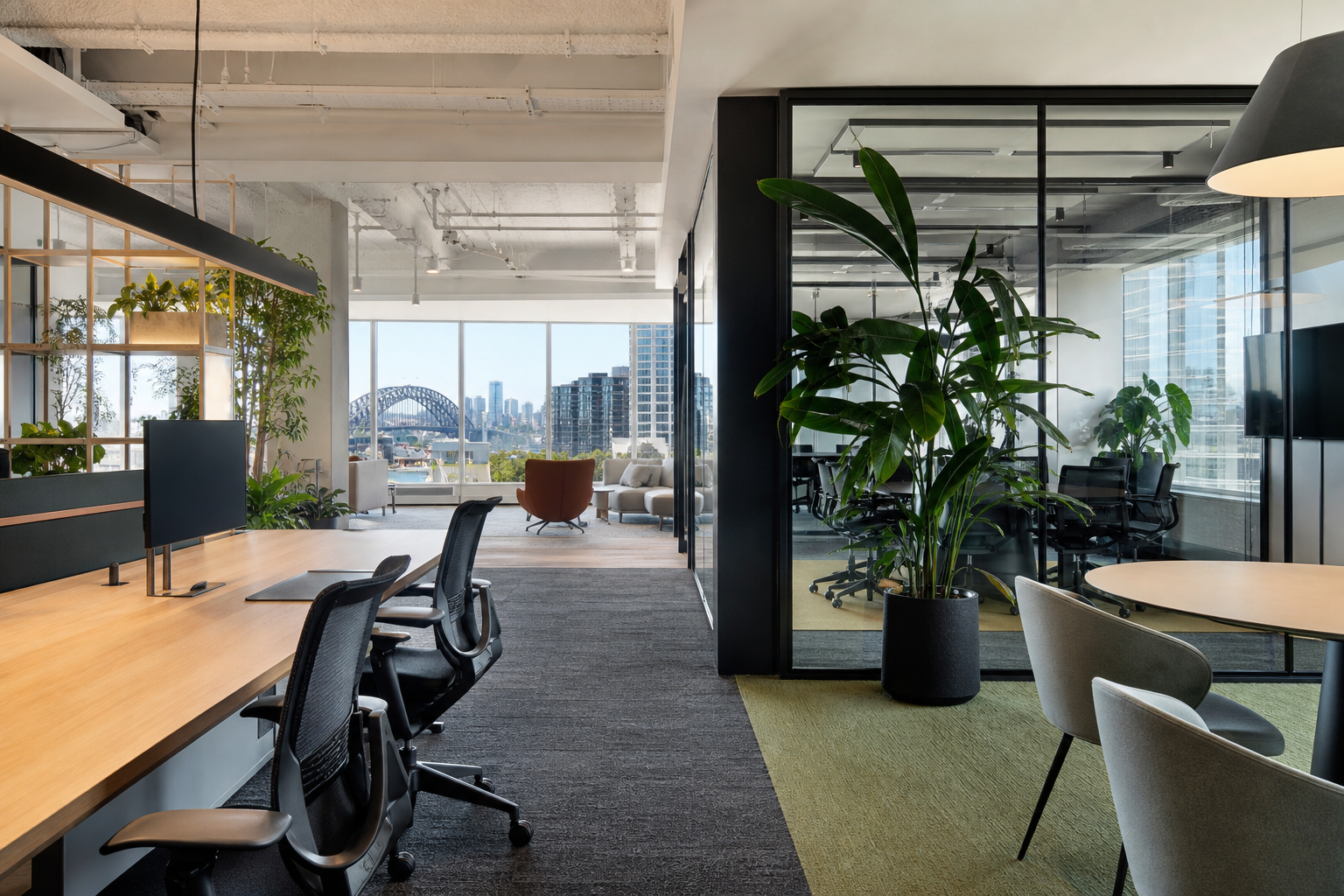
Complete Office Fitouts Sydney: The Full Lifecycle
Last updated:
Complete office fitouts Sydney projects cover the full tenancy lifecycle, not just the initial build. A genuinely complete provider takes a space from base building or Category A shell through Category B fit-out, manages in-life refreshes as the business changes, and delivers the end-of-lease make good, all under one point of accountability. Anything less, such as a builder who disappears after handover and leaves reinstatement to a separate contractor, is a partial fitout wearing a complete label.
That distinction matters because most Sydney tenancies run five to ten years, and a fitout that only covers day one leaves the business exposed at every stage after it. This guide breaks down what complete office fitouts Sydney projects should actually include, how the scope changes by project type and building condition, and how Office Fitouts Sydney structures its delivery so nothing falls between the cracks.
Key Takeaways
- A complete office fitout covers four phases: base building assessment, Category A to B fit-out, in-life adaptation, and end-of-lease make good.
- Most Sydney tenancies run five to ten years, so a fitout must be managed across the full lease term, not just at handover.
- Standard Category B fit-out costs run $900 to $1,600 per square metre, with premium fit-outs reaching $1,600 to $2,800 per square metre.
- Make good typically costs $80 to $250 per square metre and should be reviewed at project start, not left until lease expiry.
- Design and documentation for a standard Category B fit-out takes three to six weeks, while construction runs six to fourteen weeks for most tenancies.
What Does “Complete” Actually Mean in an Office Fitout?
A complete office fitout means one provider is responsible for every stage of the tenancy, from the first site inspection to the final make good inspection at lease end, rather than for a single construction event. In practice that spans four phases: base building assessment, Category A to Category B fit-out, in-life adaptation, and end-of-lease reinstatement.
Most of the market only talks about the second phase. Marketing pages show glossy Category B photography and stop there. But a lease is a multi-year commitment, and the fitout has to work across the whole term, not just the launch photo. That’s the standard complete office fitouts Sydney businesses should be measured against, full lifecycle accountability rather than a single build event.
Category A, Category B and Category C: Where “Complete” Starts
Category A is the base building condition delivered by the landlord: raised access floors, suspended ceilings, mechanical services distributed to the floor plate, and basic finishes. It is a functional shell, not an occupiable office.
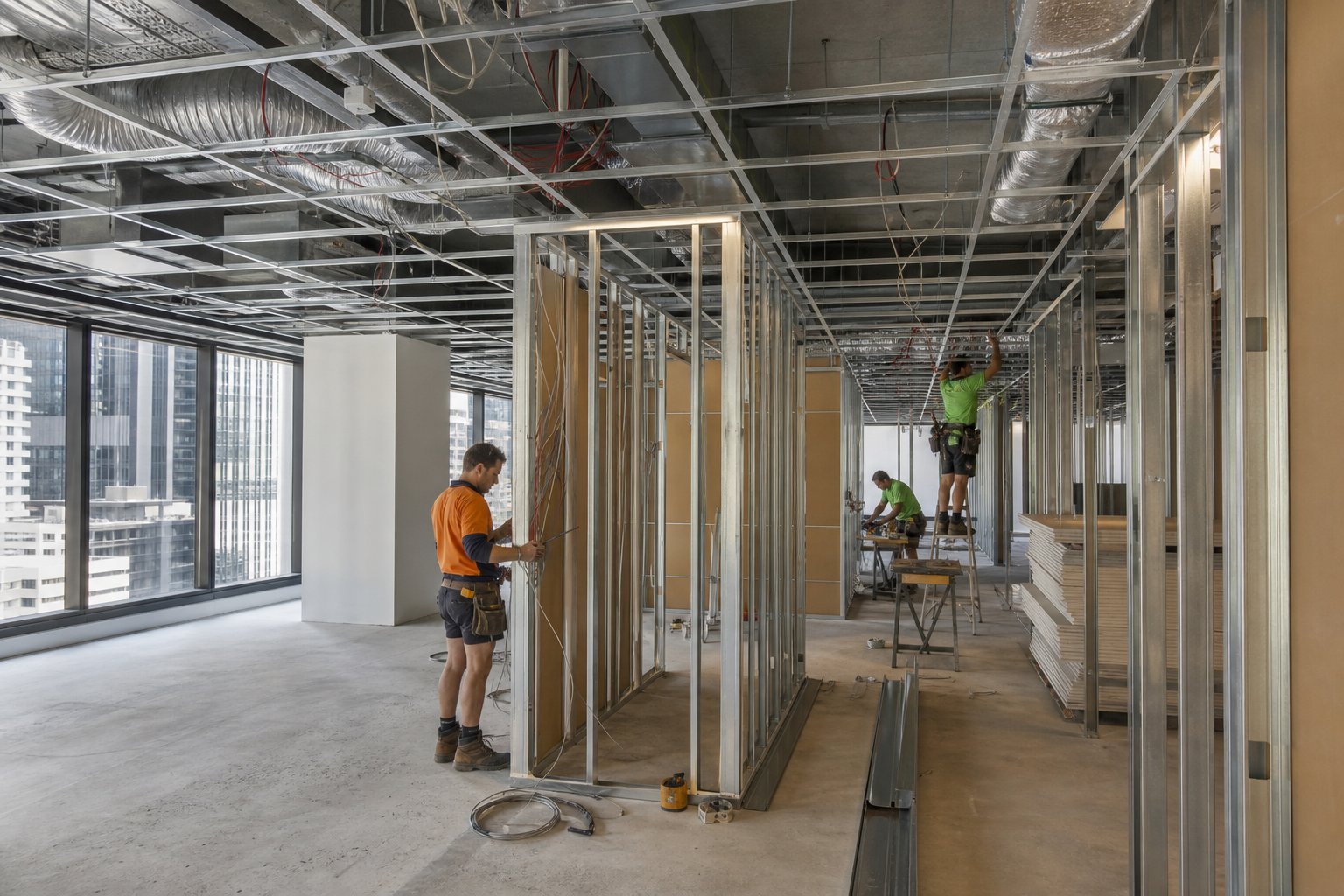
Category B is the tenant fit-out that sits on top of Category A: partitions, joinery, workstations, meeting rooms, branded finishes, and IT/AV infrastructure tailored to the business. Some practitioners use Category C to describe furniture, loose fit-out and change management layered onto a completed Cat B shell, though the line between B and C is often blurred in Australian contracts. A complete office fitouts Sydney provider needs to read Category A documentation accurately, because base building defects or under-specified services discovered mid-construction are the single most common cause of budget blowouts.
What’s Included in Complete Office Fitouts Sydney Wide at Lease Start
At lease start, a complete scope typically includes: space planning and workplace strategy, detailed design and documentation, council and landlord approvals, demolition and partitioning, mechanical and electrical services, joinery and cabinetry, floor coverings and painting, furniture procurement and installation, and IT/AV cabling and fit-off.
- Design and documentation: concept layout, detailed drawings, and specifications that satisfy landlord approval and Building Code of Australia requirements under NCC 2022 Amendment 2.
- Approvals: landlord fit-out approval, and council development or complying development approval where the works trigger it (change of use, structural alterations, or fire safety upgrades usually do; cosmetic Cat B refreshes usually don’t).
- Construction and trades: partitioning, ceilings, mechanical and electrical services, fire services tie-ins, joinery, flooring, and painting, coordinated so trades don’t clash on a live program.
- Furniture and technology: workstations, storage, meeting room furniture, and the IT and AV infrastructure that makes the space usable from day one.
If any of these sit outside the contract, the client ends up managing a second contractor mid-project, which is exactly the coordination gap a complete fitout is supposed to remove.
How the Scope Changes by Project Type
A complete office fitouts Sydney brief for a 150 sqm professional services suite looks nothing like one for a 3,000 sqm corporate floor, even though both need the same categories of work covered.
- Small office fitouts (under 300 sqm): fewer specialist trades, faster approvals, and a design phase that can often be compressed into two to three weeks. The completeness test here is whether furniture, signage and IT are actually in scope, or quietly excluded.
- Mid-size commercial fitouts (300–1,000 sqm): multiple meeting rooms, more complex mechanical zoning, and usually a staged construction program if the tenancy is partially occupied during works.
- Large corporate floors (1,000 sqm+): base building coordination becomes a distinct workstream, involving the landlord’s building manager, structural engineers for load-bearing changes, and often a change management program for staff relocation.
- Specialist fitouts (medical, laboratory, hospitality-adjacent office space): additional compliance layers around plumbing, ventilation, and specific Australian Standards that a generalist contractor may not have handled before.
A provider offering complete office fitouts Sydney wide should be able to name the specific differences in scope for each of these tiers before pricing the job, not just apply the same template regardless of size.
What Keeps a Fitout Complete After Handover
A fitout that was complete on day one can stop being complete twelve months later if the business changes and nobody adapts the space. Headcount growth, hybrid work adjustments, new meeting room technology, or a rebrand all create work that sits between “finished project” and “next full fitout.”
This in-life phase is where most single-project contractors disappear, leaving the business to find a new provider for what is often a small, awkward scope: reconfiguring three workstations, adding a phone booth, repainting a reception wall to match a new brand. A complete provider treats this as part of the same relationship, not a fresh procurement exercise, because the original documentation, supplier relationships and building knowledge are already in place.
Adaptive Reuse and Office Upgrades
Not every change needs a full re-fitout. Adaptive reuse work, upgrading finishes, adding acoustic treatment, or reconfiguring an underused meeting room into hot-desk space, can often be delivered inside existing services and partitions, which keeps cost and disruption down. Recognising when a light-touch upgrade is enough, versus when the space genuinely needs a fresh Category B fit-out, is part of what a complete office fitouts Sydney service should be assessing at each in-life review, not just at the start of a new lease.
Make Good and Defit: The Lifecycle Stage Everyone Forgets to Budget For
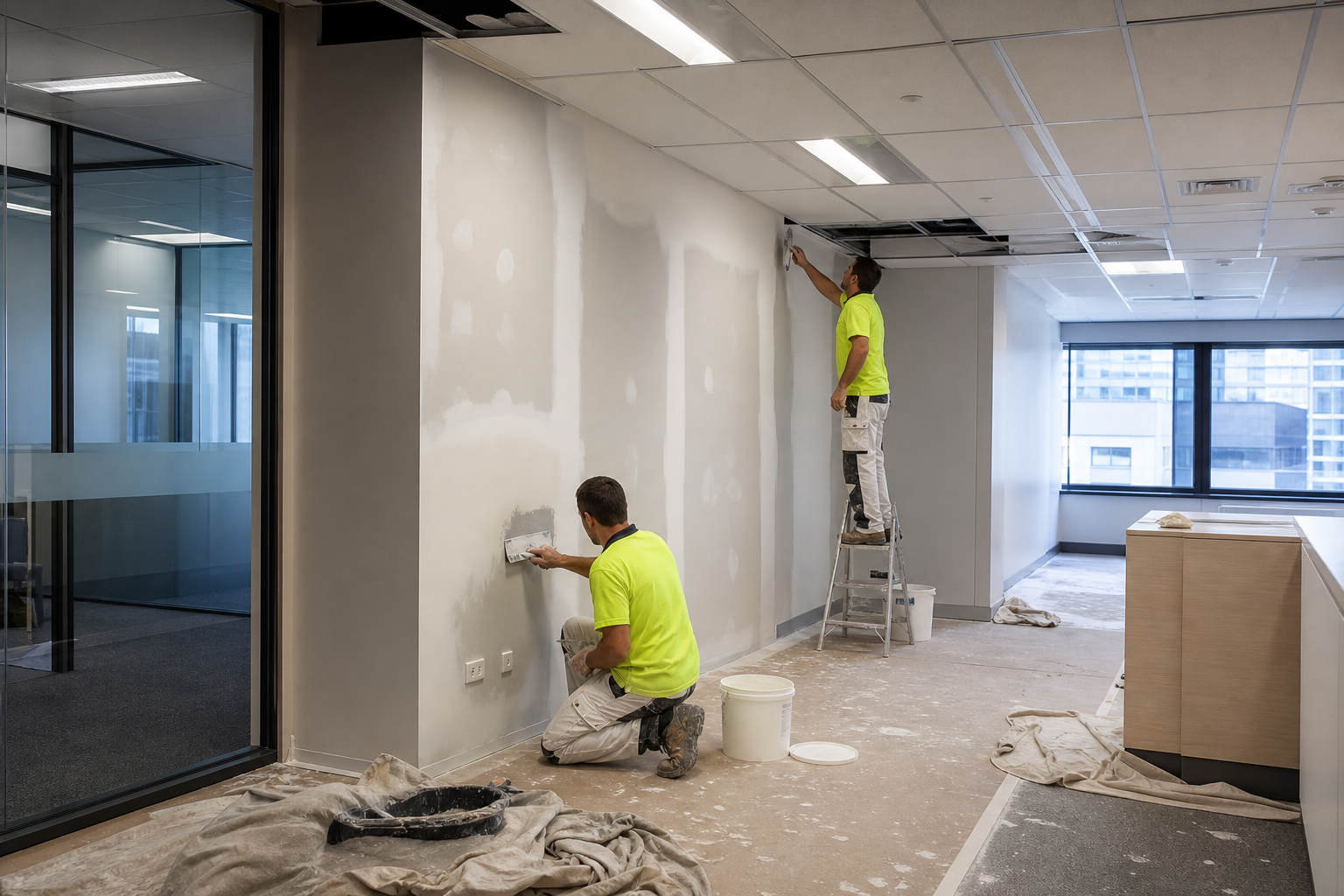
Every commercial lease in Sydney includes a make good clause, and most tenants underestimate both the cost and the lead time until the lease is close to expiry. A typical Sydney office make good runs roughly $80 to $250 per square metre depending on fitout complexity, with most projects clustering around $120 to $180 per square metre once demolition, patching, repainting, and reinstatement of base building services are all included.
As Sprintlaw’s guidance on office fitout scope-of-work clauses notes, make good obligations are set out in the lease schedule, not the fitout contract, and the wording varies: some leases require reinstatement to original base building condition, others allow negotiation of a cash settlement in lieu of physical works, and some let approved tenant improvements stay in place if the landlord wants to retain them. A complete office fitouts Sydney provider reviews the make good clause at project start, not at lease end, because the original design and documentation determines how expensive reinstatement will be years later.
- Defit: removal of tenant-installed partitions, joinery, cabling and fixtures.
- Reinstatement: patching, repainting, and restoring base building services (mechanical, electrical, fire) to full operating condition.
- Inspection and sign-off: a joint walkthrough with the landlord or their agent against the original condition report and lease schedule.
Bringing the same team that built the original Category B fit-out back for the make good means the defects liability history, service drawings and supplier records already exist, which typically shortens the reinstatement program and avoids disputes over what the space looked like on day one.
Who Should Manage Complete Office Fitouts Sydney Businesses Can Rely On?
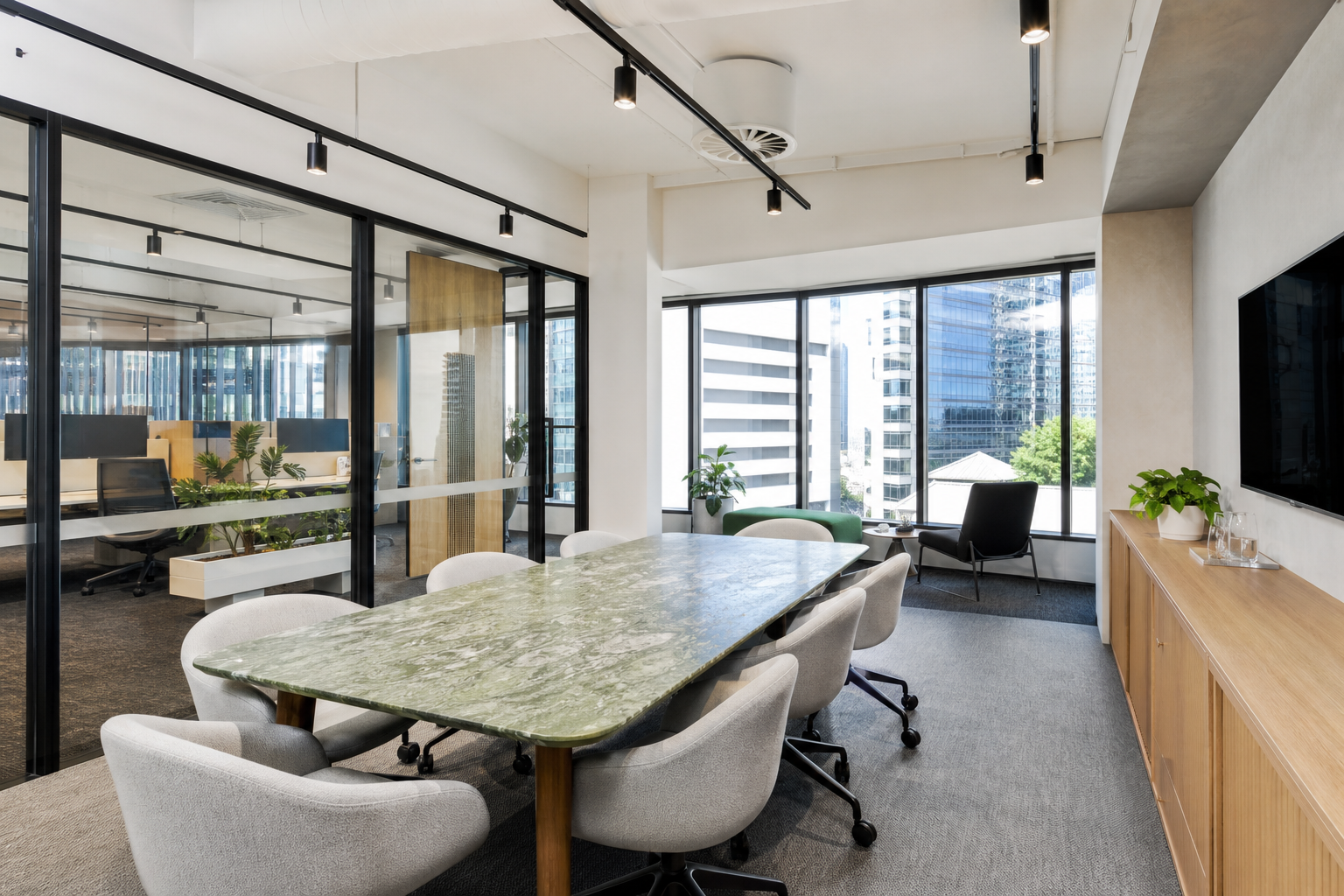
There are two broad delivery models for businesses sourcing complete office fitouts Sydney wide. In a design-and-construct model, one company holds design and construction under a single contract, which is what makes a genuinely complete scope realistic across the full lifecycle. In a design-tender-build model, an independent designer documents the project and a separate contractor is tendered to build it, which can work well for very large or highly specialised projects but creates a natural handover gap exactly where lifecycle continuity matters most, at the transition from design to construction and again at the transition from occupation to make good.
For most Sydney tenancies between 100 and 2,000 sqm, a single accountable provider delivering complete office fitouts Sydney wide, with in-house designers, project managers and trades, reduces the number of parties a business has to coordinate, and removes the finger-pointing risk between separate design and construction firms when something needs fixing.
How Much Do Complete Office Fitouts Sydney Wide Actually Cost?
Cost depends heavily on which lifecycle stages are in scope and the finish level. As a practical guide across current Sydney market rates: a refresh-level fit-out runs roughly $400 to $900 per square metre, a standard Category B fit-out $900 to $1,600 per square metre, a premium fit-out $1,600 to $2,800 per square metre, and specialised fitouts (medical, laboratory, high-end hospitality-adjacent space) $1,800 to $3,500-plus per square metre. Industry benchmarking from the Turner & Townsend Fit-Out Cost Guide 2026 places Sydney high-spec fit-out cost around $7,221 per square metre and low-spec around $3,357 per square metre, reflecting the wide range between a basic Cat B shell and a fully custom, technology-heavy workplace.
A genuinely complete office fitouts Sydney quote should itemise design, approvals, construction, furniture, technology and an allowance or clause reference for the eventual make good, so the business can see the full-lifecycle cost rather than just the headline construction figure.
How Long Does the Full Lifecycle Take?
Across complete office fitouts Sydney projects, design and documentation for a standard Category B fit-out typically takes three to six weeks depending on complexity and approval requirements. Construction runs six to fourteen weeks for most tenancies between 150 and 1,000 sqm, longer for larger floors or projects requiring structural or major services work. In-life upgrades are usually delivered in days to a few weeks depending on scope. Make good and defit at lease end generally takes two to six weeks, though the lease will specify a required completion date relative to the expiry, and that date should be locked into the program well ahead of time, not treated as a last-minute task.
Compliance Touchpoints Across the Lifecycle
Building compliance doesn’t stop once the certificate of occupation or completion is issued. The National Construction Code (NCC) 2022 Amendment 2 remains the current code applying to NSW commercial fit-out work, with NCC 2025 not adopted in NSW until 1 May 2027, so any design or approval documentation should reference the correct edition. Essential fire safety measures installed during the Category B fit-out, exit signage, fire doors, sprinkler and detection systems, require ongoing routine servicing under AS 1851-2012, which has been mandatory for relevant NSW buildings since February 2026. That servicing obligation continues through the entire lease term, not just at handover, and any changes made during in-life upgrades need to be reflected in the fire safety schedule.
How Office Fitouts Sydney Delivers a Genuinely Complete Fitout
Office Fitouts Sydney runs complete office fitouts Sydney wide under one team: a free site inspection within 48 hours of enquiry, a detailed fixed-price quote within three business days, in-house designers, project managers and trades rather than a rotating subcontractor panel, and 15-plus years managing Sydney commercial tenancies from base building assessment through to make good. Custom joinery is delivered in-house rather than outsourced, which keeps quality consistent between the original fit-out and any later adaptive reuse work using matching materials and finishes.
Because the same team documents the original design, delivers the construction, handles in-life adjustments, and returns for the make good, there’s a continuous project record; drawings, service locations, supplier warranties and the original condition report, that shortens every subsequent stage and reduces disputes with landlords at lease end.
Complete Office Fitouts Sydney Checklist: What to Ask Before You Sign
- Does the contract cover design, approvals, construction, furniture and technology, or only construction?
- Is the make good clause reviewed as part of the original scope, or left until lease expiry?
- Who manages in-life changes, headcount growth, layout adjustments, rebrands, after handover?
- Are trades in-house or subcontracted, and who carries accountability if a trade underperforms?
- Does the quote itemise costs by phase so the full lifecycle cost is visible, not just the construction line?
- Has the current NCC edition and AS 1851-2012 servicing obligation been factored into the design?
Businesses evaluating providers should compare proposals against this list, alongside the broader guidance in our best office fitouts Sydney comparison guide, which covers how to shortlist and assess contractors on more than price alone.
Sydney office fitout costs by stage, at a glance
| Lifecycle Stage | Cost (per sqm) | Typical Duration |
|---|---|---|
| Refresh-level fit-out | $400 to $900 | N/A |
| Standard Category B fit-out | $900 to $1,600 | Design 3 to 6 weeks; construction 6 to 14 weeks |
| Premium fit-out | $1,600 to $2,800 | N/A |
| Specialised fit-out (medical, lab, hospitality-adjacent) | $1,800 to $3,500-plus | N/A |
| In-life upgrades | Varies by scope | Days to a few weeks |
| Make good and defit | $80 to $250 (clustering $120 to $180) | 2 to 6 weeks |
Frequently Asked Questions
What is the difference between a complete fitout and a turnkey fitout?
Turnkey describes an accountability model, one contractor responsible for handing over a finished, ready-to-use space. Complete describes lifecycle scope, covering base building assessment, Category B fit-out, in-life adaptation and end-of-lease make good. A fitout can be turnkey at handover but incomplete if nobody is contracted to manage the space after day one.
Do complete office fitouts Sydney contracts include furniture and IT?
It should, if the provider is genuinely offering complete office fitouts Sydney businesses can rely on for the full term. Furniture procurement, workstations, and IT/AV cabling and fit-off are core lifecycle components, not optional add-ons, and should be itemised in the initial quote rather than assumed.
How much does a complete office fitout cost per square metre in Sydney?
Current Sydney rates range from roughly $400 to $900 per square metre for a refresh, $900 to $1,600 for a standard Category B fit-out, and $1,600 to $2,800 or more for a premium or specialised fit-out, plus an eventual make good allowance of $80 to $250 per square metre at lease end.
Do I need council approval for a complete office fitout?
Not always. Cosmetic Category B works, new partitions, joinery, painting, generally fall under complying development or don’t trigger council approval at all. Structural changes, fire safety upgrades, or a change of use typically do require development approval, so this should be confirmed during the design phase, not assumed either way.
What happens if my business needs changes after the fitout is finished?
A complete provider treats post-handover changes as in-life adaptive reuse work, using the existing design documentation and services layout, rather than requiring a fresh procurement process. This is usually faster and cheaper than starting over with a new contractor who has no history with the space.
When should I start planning for the office make good?
Ideally at the start of the original fit-out, when the make good clause should be reviewed alongside the design. Practically, most businesses should start the formal make good program four to six months before lease expiry to allow time for scoping, landlord sign-off and scheduling the works.
Is a design-and-construct provider better than separate design and build firms for a complete fitout?
For most Sydney tenancies between 100 and 2,000 sqm, yes. A single design-and-construct provider removes the handover gap between design and construction and keeps one team accountable across the full lifecycle, including later in-life changes and the eventual make good.
For more detail on how the initial build stage is scoped, see our guide to what’s actually included in a turnkey office fitout, or read our office fitout checklist for a step-by-step planning sequence. To get a fixed-price quote covering the full lifecycle of your Sydney office fitout, request a free site inspection with Office Fitouts Sydney.
Make Office Fitouts Sydney a preferred source in Google
One click tells Google to surface our articles more often in Top Stories, AI Overviews and AI Mode.