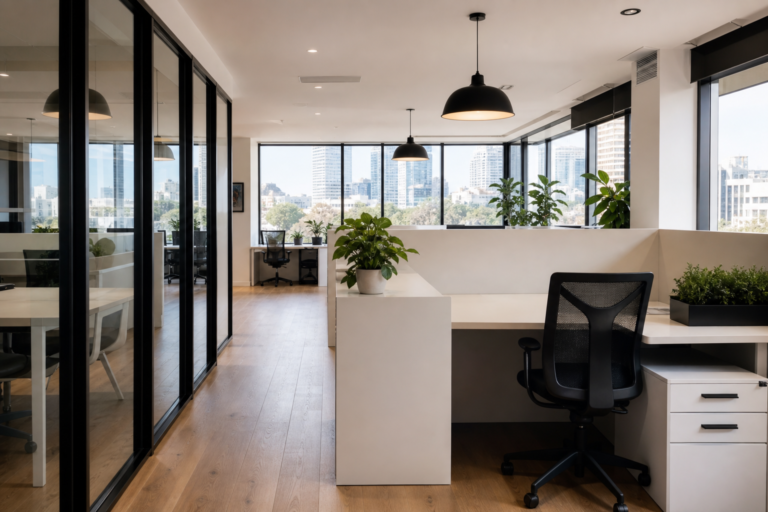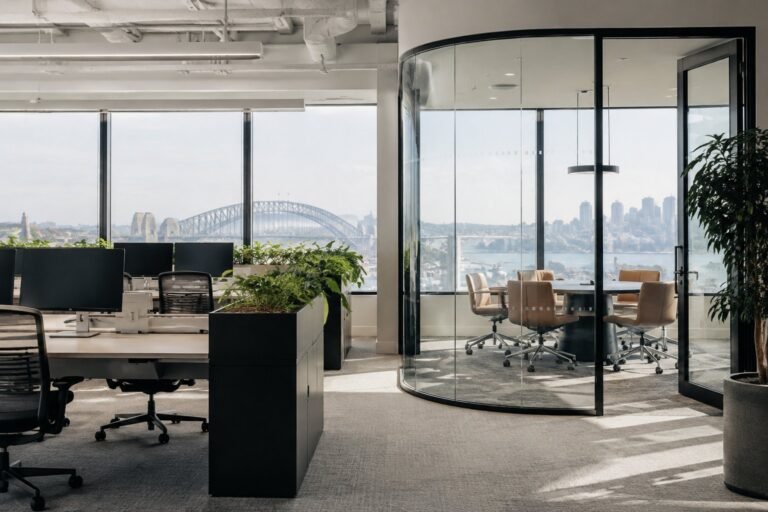
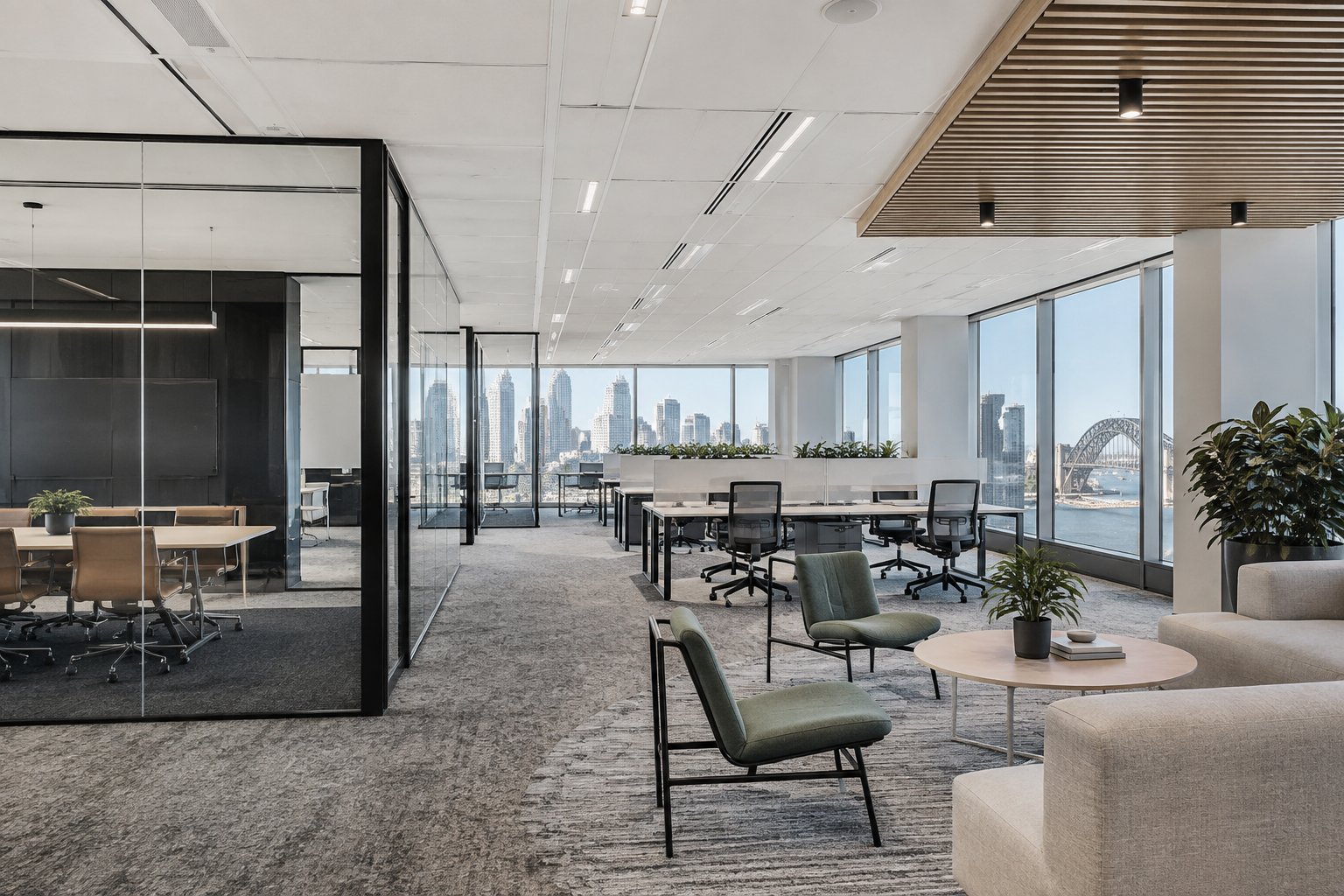
Office Refurbishment Sydney: Refurbish, Relocate or Refit?
Last updated:
Office refurbishment Sydney projects typically make sense when a lease renewal is within 6-18 months, the existing floor plate has good bones (natural light, workable structure, adequate services capacity), and the cost of upgrading in place lands at roughly 30-50% of a full relocation and new fitout. If the building’s services are past their useful life, its layout can’t be reconfigured to suit hybrid work, or DDA and fire compliance gaps have appeared, refurbishment is still usually the right call, it just needs a wider scope than a cosmetic refresh. This guide sets out how to make that call, what actually drives cost and timeline, and the compliance triggers that catch tenants in older Sydney buildings off guard.
Key Takeaways
- Refurbishment costs typically 30 to 50% of relocating and fitting out a new tenancy, once make-good and downtime are factored in.
- Office refurbishment Sydney costs generally range from $800 to $2,500 per square metre depending on scope.
- Buildings constructed or fitted out before 31 December 2003 require a hazardous materials assessment before refurbishment or demolition work begins.
- Most refurbishment projects run 8 to 20 weeks, with a cosmetic refresh completing in as little as 6 to 8 weeks.
- Sydney CBD gross incentives now average over 35% of the total rental commitment, up from sub-20% pre-pandemic, favouring staying and refurbishing.
Office Refurbishment Sydney vs Relocation vs Full Fitout: The Decision Framework
The three options tenants weigh at lease events are refurbish in place, relocate to new premises, or strip back to a full fitout in the current tenancy. Each has a different risk, cost and disruption profile, and the right choice depends on lease timing more than aesthetics.
Refurbishment suits a tenancy with 5+ years remaining or a landlord offering an incentive to stay, where the floor plate still works structurally and the main problem is dated finishes, tired services, or a layout that no longer matches how the team works. JLL notes that gross incentives in Sydney’s CBD now average over 35% of the total rental commitment over a lease term, up from sub-20% pre-pandemic, which materially changes the maths in favour of staying and refurbishing rather than absorbing relocation and defit costs on top of a new lease.
Relocation makes more sense when the current floor plate has a structural constraint refurbishment can’t fix, such as insufficient natural light, poor floor-to-ceiling height, or a location that no longer suits headcount or client access. It also becomes attractive when the make-good obligation at the outgoing tenancy is small relative to the upgrade needed to stay.
A full fitout inside the same tenancy sits between the two: appropriate when the lease has a long term remaining but the space needs a genuinely new floor plan, not just updated finishes. Office Fitouts Sydney runs the numbers on all three scenarios during a site inspection so the decision is based on total cost of occupancy, not just headline fitout price.
What Triggers an Office Refurbishment Sydney Decision
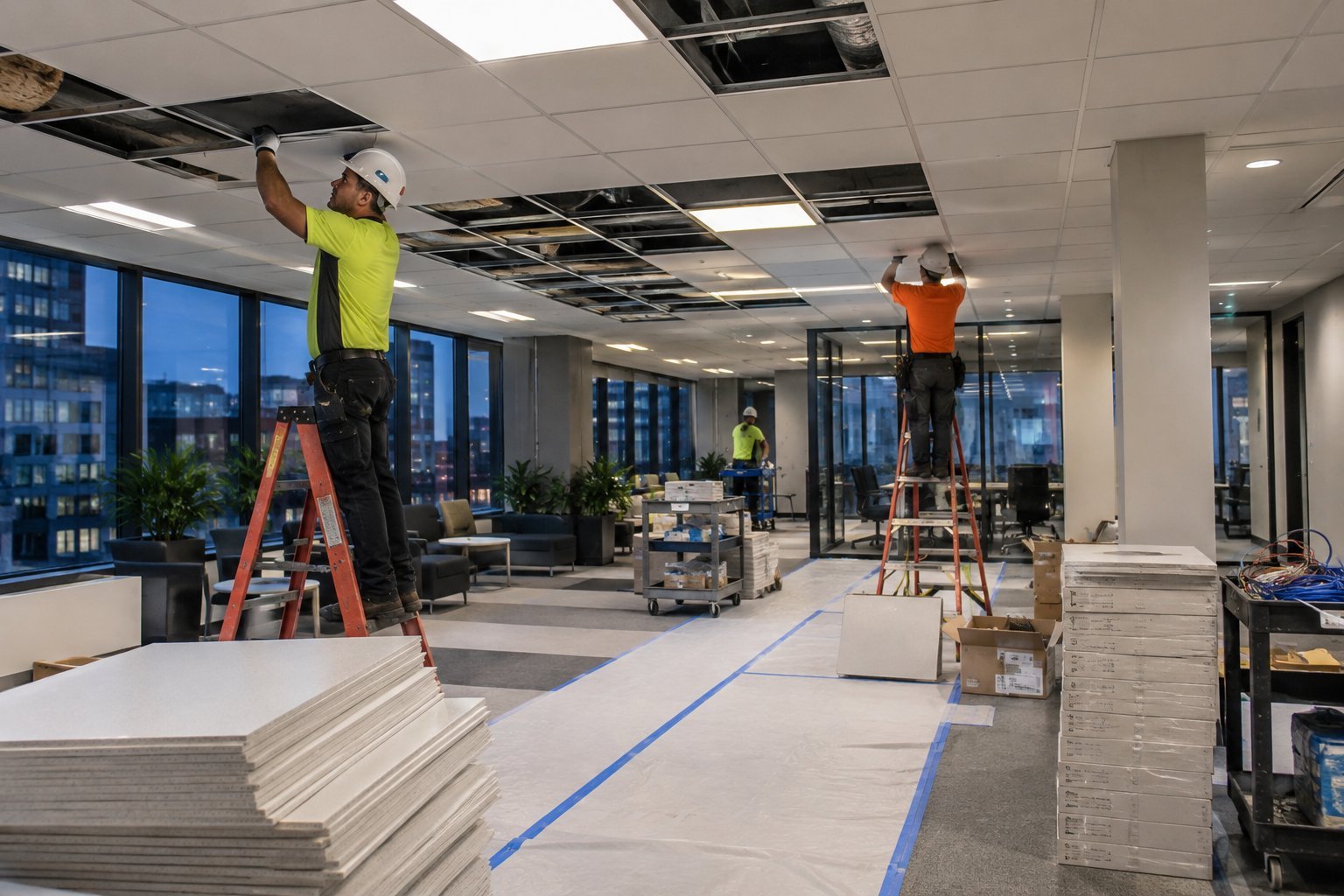
Refurbishment projects rarely start because a space “looks tired.” They start from a specific trigger, and identifying which one applies shapes the scope and budget from day one.
- Lease renewal or extension: landlords increasingly bundle refurbishment incentives into renewal negotiations, particularly in buildings competing for tenants against higher-incentive stock.
- Sustainability and NABERS targets: corporate ESG commitments or landlord green lease clauses push tenants to upgrade lighting, HVAC controls and end-of-trip facilities.
- Workplace strategy change: a shift to activity-based or hybrid working patterns that the existing cellular layout can’t support without reconfiguring partitions and services.
- Compliance gaps: essential fire safety measures, accessibility upgrades, or hazardous materials identified during due diligence.
- Growth or downsizing: headcount change that the current floor plate can absorb with reconfiguration rather than a full relocation.
Most projects Office Fitouts Sydney scopes involve two or three of these triggers overlapping, which is why a proper refurbishment brief starts with a site condition report, not a Pinterest board.
Office Refurbishment Sydney Cost: What Drives the Number Per Square Metre
Office refurbishment Sydney costs generally fall between $800 and $2,500 per square metre depending on scope, with most projects landing well below full new-build fitout rates because structure, ceilings and often base services are retained rather than replaced. A light refresh, new carpet, paint, updated joinery and lighting, sits at the lower end. A full services and layout overhaul, including new mechanical zoning, data cabling, partition reconfiguration and a compliance upgrade, pushes toward the top of that range.
Four factors move the number more than any others:
- Services condition: whether HVAC, electrical distribution and fire systems can be retained, upgraded, or need full replacement.
- Building age and grade: pre-2000s buildings more often carry hazardous materials, outdated switchboards, or non-compliant accessibility features that must be addressed as part of the works.
- Occupied vs vacant works: refurbishing around a working tenant adds after-hours labour, staged handovers and protection costs that a vacant fitout doesn’t carry.
- Compliance scope: whether the trigger is cosmetic only or includes a fire safety, access, or hazardous materials remediation component.
Office Fitouts Sydney provides a fixed-price quote within 3 business days of a free site inspection, so the cost driver breakdown is specific to the actual building rather than a generic per-sqm estimate.
Refurbishing Older Sydney Buildings: The Compliance Triggers Most Tenants Miss
Refurbishment in an older commercial building carries obligations a brand-new fitout doesn’t. Three come up repeatedly on Sydney projects and each needs to be identified before, not during, construction.
Hazardous materials in pre-2004 buildings
Under the NSW Work Health and Safety Regulation 2017, any refurbishment or demolition work at a workplace built or fitted out before 31 December 2003 requires the person with management or control of the workplace to identify whether asbestos is present before disturbing existing structures or plant. A pre-refurbishment hazardous materials survey is standard practice on any Sydney office refurbishment involving an older base building, and any confirmed material must be managed under SafeWork NSW’s asbestos code of practice before demolition trades start.
Accessibility upgrades under AS 1428
The Disability (Access to Premises – Buildings) Standards reference the AS 1428 suite for access and mobility, and refurbishment scope that touches entries, amenities, or circulation paths can trigger an obligation to bring those elements up to current access requirements even where the rest of the tenancy is untouched. Getting an access consultant’s read on trigger thresholds early avoids redesigning bathrooms or reception areas mid-construction.
Essential fire safety measures
Refurbishment that alters fire compartmentation, ceiling penetrations, or egress paths needs to be checked against the building’s current fire safety schedule and NCC 2022 Amendment 2 requirements (the code currently in force in NSW), with any essential safety measures affected by the works recommissioned and certified before occupation.
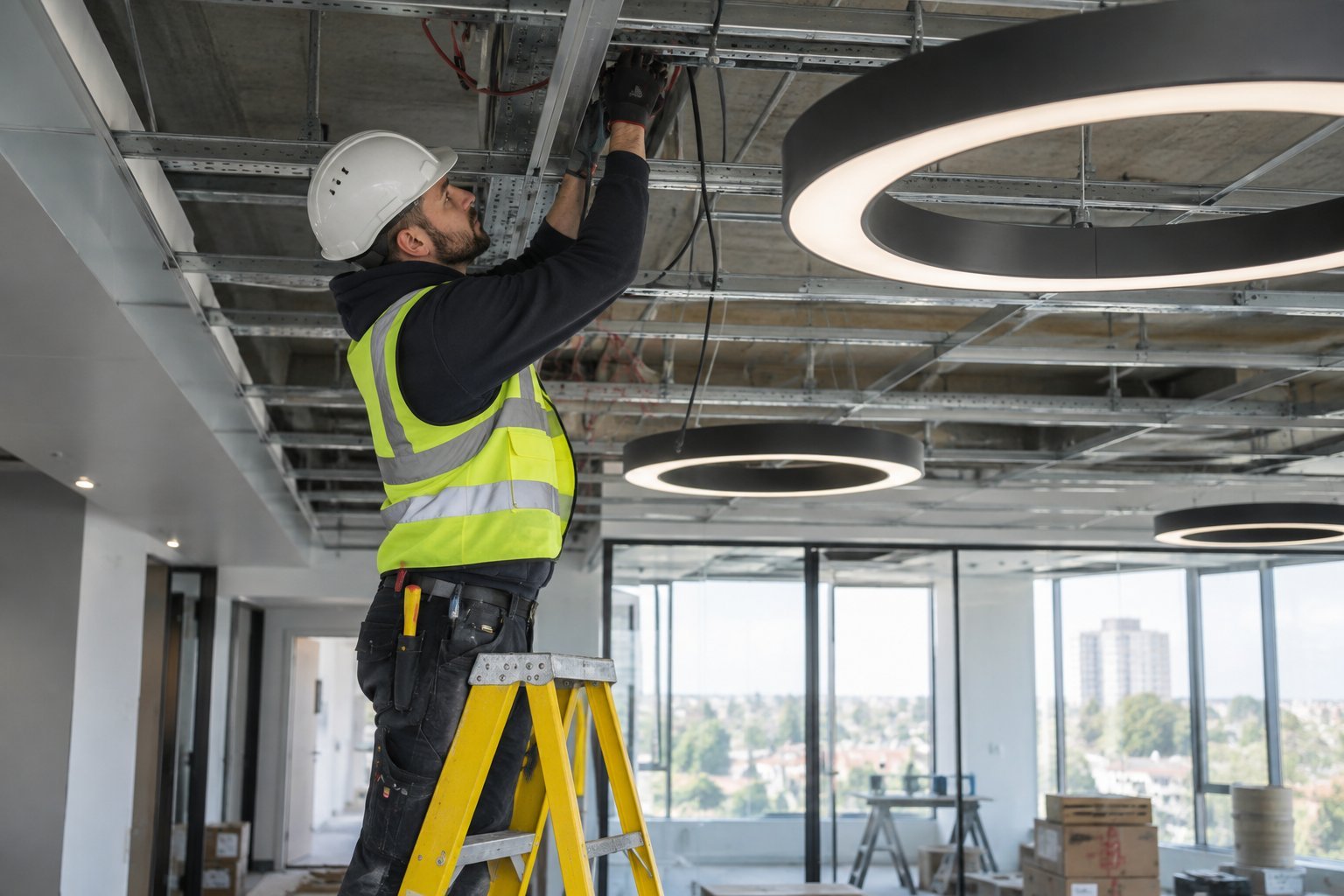
Sustainability Retrofits: Where NABERS and Embodied Carbon Fit Into Refurbishment
A growing share of office refurbishment Sydney briefs now include a NABERS Energy rating target, driven by green lease clauses, corporate ESG reporting, or landlord upgrade programs. The McKell Building in Sydney’s CBD lifted its NABERS Energy rating from 2.5 to 5.5 stars since 2001 through staged electrification and services upgrades, an example of what a base-building-level retrofit can achieve without a full rebuild.
At tenancy level, the practical levers are LED lighting with occupancy sensors, upgraded mechanical zoning and controls, end-of-trip facilities, and metering that lets facilities teams track consumption against a NABERS target. Refurbishment also has a strong embodied carbon case: the Australian Building Codes Board’s embodied carbon guidance and published research on office fitout life cycle assessment both point to retaining structure, ceilings and base services delivering a materially lower embodied carbon footprint than a strip-out and rebuild, an argument worth making to sustainability-minded stakeholders when refurbishment is being weighed against relocation to a “greener” building.
Staged and Occupied Office Refurbishment Sydney Projects
Most Sydney tenants can’t vacate for the length of a refurbishment program, so staging is standard practice rather than the exception. Typical approaches include splitting the floor into zones and refurbishing one at a time, running noisy or dusty trades after hours or on weekends, and temporarily relocating teams within the existing floor plate rather than off-site. Office Fitouts Sydney’s in-house project managers plan the staging sequence, access windows and IT/services cutover points before construction starts, the same continuity-first approach covered in our guide to keeping your team working during a fitout.
Timeline for a typical office refurbishment Sydney project runs 8 to 20 weeks depending on scope, occupied-vs-vacant staging, and whether services or compliance remediation is involved. A cosmetic refresh at the lower end can complete in 6 to 8 weeks; a full services and compliance overhaul on an occupied floor can extend past 20 weeks once staged handovers are built into the program.
How Office Fitouts Sydney Approaches Refurbishment
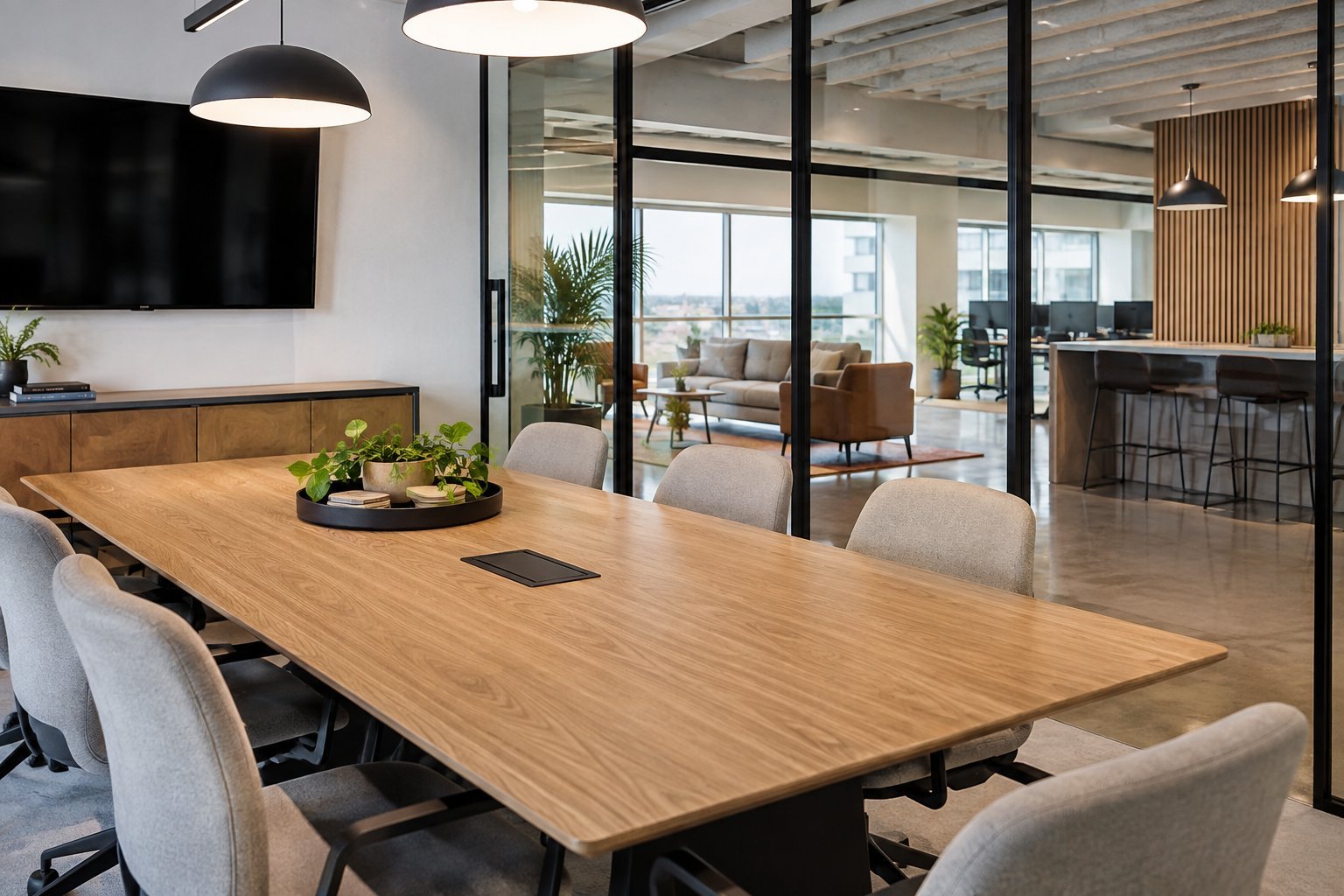
Office Fitouts Sydney runs office refurbishment Sydney projects with a free site inspection within 48 hours and a detailed, fixed-price quote within 3 business days, so tenants have a real number to weigh against relocation before committing. Every project is delivered by in-house designers, project managers and trades rather than a subcontractor panel, which keeps quality control and program accountability with a single team across design, hazardous materials coordination, compliance upgrades and custom joinery.
With 15+ years delivering office fitouts and refurbishments across Sydney, Office Fitouts Sydney scopes the base building condition, compliance exposure and staging requirements up front, then builds a program around the tenant’s operating hours rather than the trade sequence that’s easiest for the builder. See our best office fitouts Sydney page for examples of completed projects, or start with a free site inspection to get a refurbishment quote for your building.

Office Refurbishment Sydney: Small vs Large Scope Projects
Not every office refurbishment Sydney project is the same size, and matching the scope to the actual need keeps budgets honest. A small refurbishment, typically under 300 sqm, usually covers new carpet, paint, updated lighting, refreshed joinery and minor reconfiguration, and can often run without full vacate or extensive after-hours works. A mid-scale office refurbishment Sydney project, 300 to 1,000 sqm, more often touches partition layout, HVAC zoning and a portion of the electrical and data infrastructure, and needs a proper staging plan if the floor stays occupied.
Large office refurbishment Sydney projects above 1,000 sqm, particularly across a whole floor or multiple floors, tend to bundle several of the triggers covered earlier: lease renewal, a NABERS or sustainability target, and a compliance upgrade, all in one program. These projects benefit most from an early condition report and a scope that separates cosmetic works from services and compliance works, so the fixed-price quote reflects what’s actually driving cost rather than a blended per-sqm number that hides where the budget is really going.
Whatever the scale, the same due diligence applies: confirm what’s structurally fixed versus what can be reconfigured, get compliance exposure assessed before pricing, and set a realistic program around whether the space needs to stay occupied throughout the office refurbishment Sydney works.
Office Refurbishment Sydney Checklist Before You Commit
- Confirm lease term remaining and any landlord incentive tied to staying and refurbishing.
- Get a base building condition report: services age, structural constraints, natural light, floor-to-ceiling height.
- Commission a hazardous materials survey if the building was constructed or fitted before 2004.
- Check whether the planned works trigger AS 1428 access upgrades or fire safety recommissioning.
- Set a NABERS or sustainability target if ESG reporting or a green lease clause applies.
- Decide on staging: full vacate, zone-by-zone, or after-hours works around an occupied floor.
- Get a fixed-price quote that separates cosmetic scope from compliance and services scope.
Refurbish vs relocate vs full fitout: which fits your lease?
| Option | Best suited when | Relative cost | Timeline |
|---|---|---|---|
| Refurbish in place | 5+ years lease remaining, floor plate structurally sound, dated finishes/services | 30-50% of relocation and new fitout cost | 8-20 weeks (6-8 weeks for cosmetic refresh) |
| Relocate | Structural constraint refurbishment cant fix, e.g. poor natural light or ceiling height | Higher, includes relocation, make-good and downtime | Not specified |
| Full fitout in same tenancy | Long lease remaining but space needs genuinely new floor plan | Higher than refurbishment, near new-build fitout rates | Not specified |
Frequently Asked Questions
How much does office refurbishment cost in Sydney?
Office refurbishment Sydney typically costs $800 to $2,500 per square metre, depending on whether the scope is a cosmetic refresh or a full services, layout and compliance overhaul. Occupied, staged projects generally cost more per square metre than a vacant refurbishment because of after-hours labour and staged handovers.
Is it cheaper to refurbish an office or relocate in Sydney?
Refurbishing in place is usually 30 to 50% of the cost of relocating and fitting out a new tenancy once relocation, make-good and downtime costs are included, provided the existing floor plate doesn’t have a structural constraint that refurbishment can’t resolve.
Do I need an asbestos survey before an office refurbishment in Sydney?
If the building was constructed or fitted out before 31 December 2003, the NSW Work Health and Safety Regulation 2017 requires a hazardous materials assessment before refurbishment or demolition work disturbs existing structures or plant.
How long does an office refurbishment take in Sydney?
Most office refurbishment Sydney projects run 8 to 20 weeks. A cosmetic refresh can complete in 6 to 8 weeks, while a staged, occupied refurbishment involving services or compliance upgrades can extend beyond 20 weeks.
Can an office refurbishment happen while the team keeps working?
Yes. Staging by zone, scheduling noisy or disruptive trades after hours, and temporarily relocating teams within the existing floor plate are all standard approaches Office Fitouts Sydney uses to keep an occupied tenancy operating during a refurbishment.
Does an office refurbishment need council or landlord approval?
Landlord approval is required for almost all refurbishment work under a standard commercial lease, and works affecting fire safety, structure or the building’s essential services may also require a construction certificate or private certifier sign-off depending on scope.
What’s the difference between an office refurbishment and a full fitout?
A refurbishment typically retains structure, ceilings and often base services while upgrading finishes, layout and selected systems, whereas a full fitout strips back to base building and reconfigures the entire tenancy, usually at a higher cost per square metre.
Make Office Fitouts Sydney a preferred source in Google
One click tells Google to surface our articles more often in Top Stories, AI Overviews and AI Mode.