
Office Fit Out Sydney: What Happens On Site
Last updated:
What actually happens during an office fit out Sydney site program? An office fit out Sydney project moves on site once approvals and the landlord’s consent are in place, then runs through demolition, services rough in, partitioning, ceilings and floors, joinery, finishes, furniture, commissioning and handover. Most Sydney tenancies take eight to twenty weeks on site, and the build is controlled by a trade sequence, a set of building access rules and a program of inspections rather than by design decisions, which should already be locked.
This guide covers the construction stage specifically. If you are still shaping the scope, start with our office fitout services overview and the earlier articles on planning and briefing. Here we walk through what your contractor is doing week by week, what the building manager will and will not allow, where programs slip, and how a tenancy is properly closed out so you can move in without a punch list hanging over you.
Where an Office Fit Out Sydney Project Starts On Site
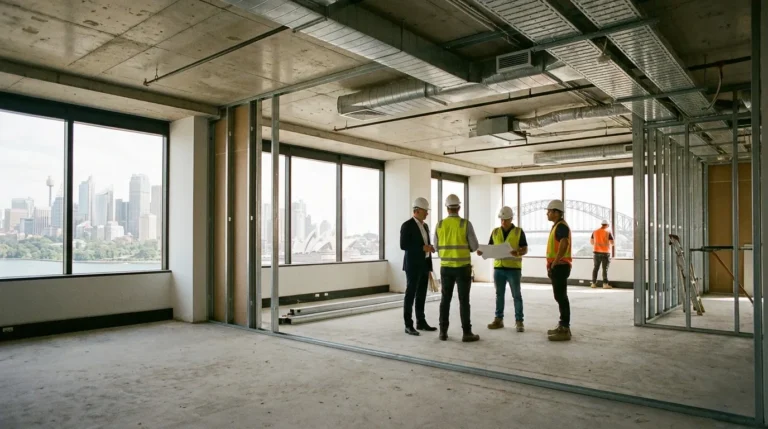
An office fit out Sydney build starts with mobilisation, not with demolition. Before a single wall comes down, the contractor issues a construction program, a site specific safety plan, insurance certificates, SWMS for each high risk activity, and a schedule of site inductions. The building manager reviews all of this and issues a permit to work for the tenancy. In most Sydney commercial towers you cannot lift a tool until that pack is accepted.
Mobilisation also settles the practical logistics that quietly decide whether your program holds:
- Loading dock and lift bookings. Goods lift access in CBD buildings is often limited to set windows, sometimes only outside business hours. Every major delivery, from partition frames to workstations, has to be booked against those windows.
- Waste and recycling. Strip out waste must leave through approved routes with waste dockets retained, which matters if you are chasing a Green Star Interiors or NABERS outcome.
- Protection works. Lift cars, lobbies, common corridors and base building finishes get protected before anything moves. Damage to base building finishes is charged back to the tenant.
- Site establishment. Temporary power, site amenities, hoarding or screening to the tenancy entry, and a site office or table for coordination meetings.
- Fire and services isolations. Detectors are isolated and re instated under permit each day, with the fire contractor engaged before demolition begins.
Expect one to two weeks for mobilisation on a typical office fit out Sydney tenancy. On a fast track job it can overlap with the tail of documentation, but it cannot be skipped.
Office Fit Out Sydney Trade Sequencing, Stage by Stage
The core of any office fit out Sydney build is trade sequencing. On an office fit out Sydney site, trades are not scheduled by convenience, they are scheduled by dependency. Getting one trade in early out of order usually costs more than waiting.
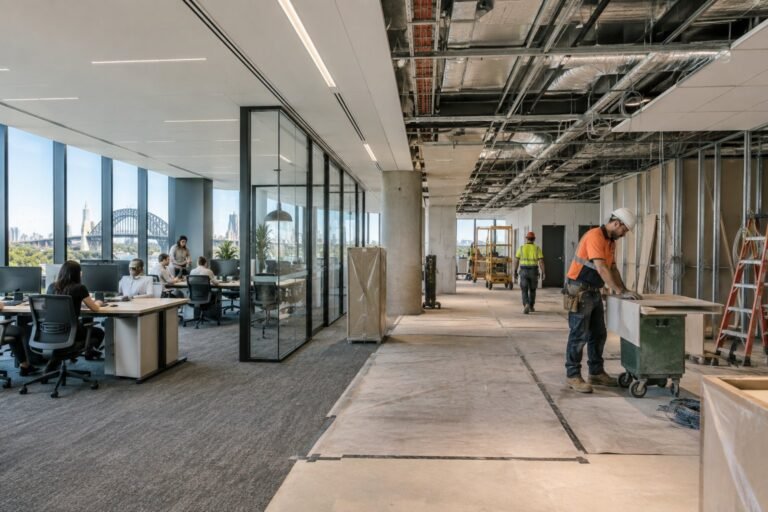
Stage 1: Strip out and demolition (1 to 2 weeks)
Existing partitions, joinery, redundant cabling, old floor coverings and sometimes ceiling grid come out. In older Sydney stock, pre 1990 buildings especially, a hazardous materials survey should already have been completed. If bonded asbestos is found in vinyl backing, mastic or fire doors, licensed removal and clearance certification is required before any other trade returns.
Stage 2: Services rough in (2 to 4 weeks)
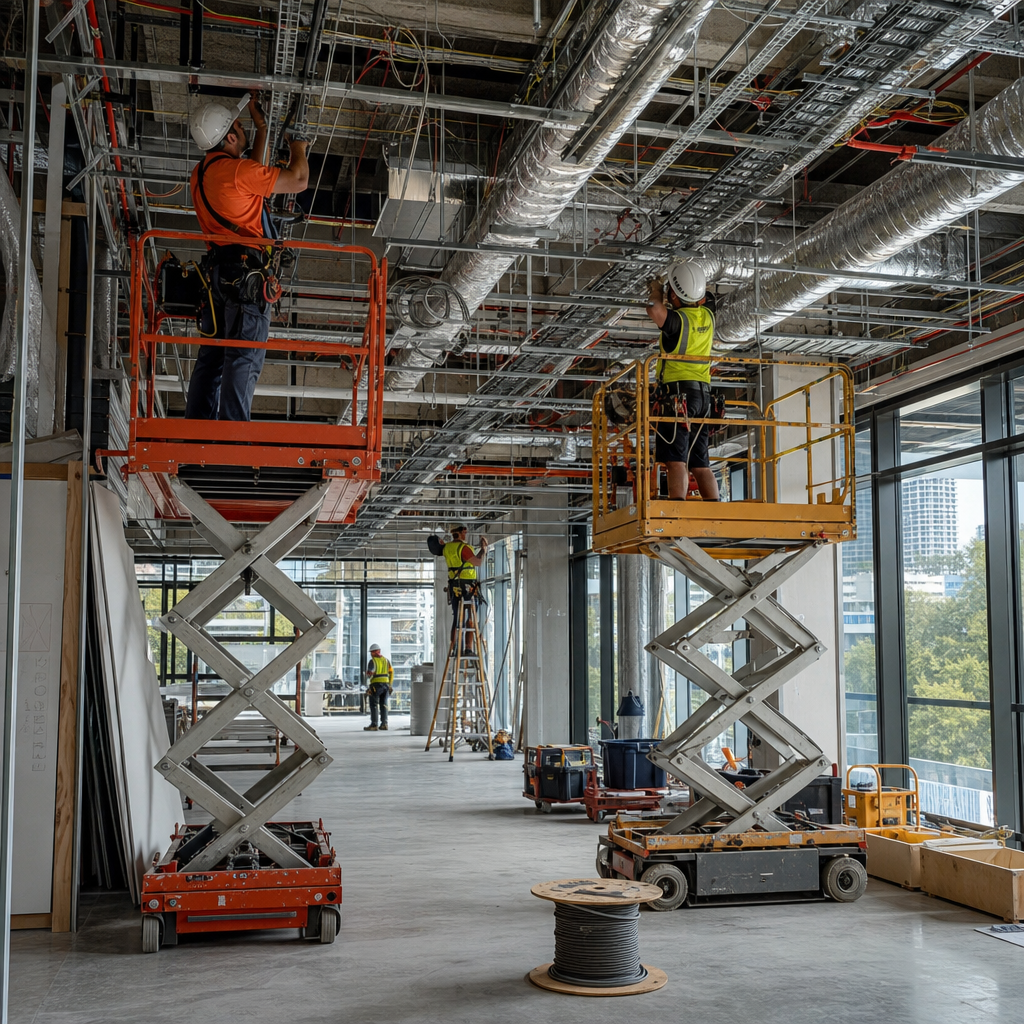
Electrical, data, mechanical, hydraulic and fire trades work above the ceiling and in wall cavities at the same time. This is the most congested phase and the one most exposed to coordination errors. A coordinated services drawing set, ideally clash detected, is worth far more here than it costs.
Stage 3: Partitions and structure (2 to 3 weeks)
Stud framing goes up, acoustic insulation is installed, and one side of each wall is sheeted so services can be inspected before closing up. Fire rated walls, if any, are built to a tested system and must be inspected and photographed before sheeting.
Stage 4: Ceilings, floors and glazing (2 to 4 weeks)
Ceiling grid and tiles, bulkheads, acoustic rafts, then floor coverings once wet trades are finished. Glazed partitions and doors are measured on site after framing, which is why glass usually arrives late in the program and why a glazing delay stops a handover date cold.
Stage 5: Joinery and finishes (2 to 3 weeks)
Reception joinery, tea point and utility joinery, benches, painting, wall protection, signage and feature finishes. Joinery is typically fabricated off site in parallel with earlier stages, then installed in a short window.
Stage 6: Fit off, furniture and commissioning (1 to 2 weeks)
Power and data outlets are fitted off, light fittings are installed and controls programmed, mechanical is balanced, fire systems are tested, then furniture and AV are installed. Commissioning records, air balance reports and electrical test results all form part of the handover pack.
Stage 7: Cleaning, defects and handover (1 week)
Builders clean, then detail clean, defect inspection with the tenant and the consultant team, defect rectification, and finally handover with the operation and maintenance manuals, as built drawings, warranties and certificates.
Working in an Occupied Tenancy Versus a Vacated One
The single biggest driver of office fit out Sydney duration on site, after size, is whether the floor is empty. A vacated tenancy runs on a normal program. An occupied or staged fit out changes almost every assumption.
In a staged build the contractor works in zones, moves your team between decanted areas, and pushes noisy or dusty work to evenings and weekends. Practical consequences:
- Add 20 to 40 percent to the program. Staged works are slower because trades cannot run continuously across the floor.
- Add cost for after hours labour. Night and weekend rates apply to demolition, core drilling, fire isolations and anything with noise or vibration.
- Plan temporary services. Data, power, lighting, air conditioning and amenities must keep working in the occupied zone throughout.
- Manage dust and noise formally. Negative pressure hoardings, sealed returns and an agreed noise curfew protect both your staff and the neighbouring tenants who can lodge complaints with the building manager.
- Communicate weekly. A short weekly notice to staff covering what is happening, where and when prevents most of the friction.
If your lease timing allows a swing space or an early handover of the new premises, a vacated build is almost always cheaper and faster than staging around your own people.
Compliance, Inspections and Certification During the Build
Construction stage compliance for an office fit out Sydney project runs on a defined set of New South Wales checkpoints. Your contractor manages them, but as the tenant you carry the tenancy, so it pays to know what is being signed.
Key items on a Sydney office fitout:
- National Construction Code. NSW currently applies NCC 2022 Amendment 2, and adopts NCC 2025 on 1 May 2027. Fit out work triggers Code requirements for egress, travel distances, exit signage, accessibility, fire separation, glazing and energy efficiency of lighting and mechanical services.
- Approval pathway. Depending on scope, works may be exempt development, a complying development certificate, or a development application with a construction certificate. Anything that changes egress, fire compartmentation, use or building services usually escalates the pathway. Our guides on approvals and council consent cover the tests in detail.
- Principal certifier inspections. Where a construction certificate applies, mandatory inspections are booked at defined hold points. Missing an inspection can mean opening up completed work.
- Essential fire safety measures. Any measure you alter, add or remove flows into the building’s fire safety schedule and the annual fire safety statement. Routine servicing in relevant NSW buildings has been assessed against AS 1851 2012 since 13 February 2026, so your fire contractor’s records must align with the base building regime.
- Electrical and mechanical certification. Certificates of compliance for electrical work, switchboard schedules, and mechanical commissioning data are all part of a clean handover.
- Accessibility. Doorway widths, circulation space, sanitary facilities where affected, and tactile or luminance contrast requirements apply to new work. For the current Code text, the Australian Building Codes Board publishes the NCC free at ncc.abcb.gov.au.
How to Keep an Office Fit Out Sydney Program on Track
Most office fit out Sydney programs do not slip because of the trades. They slip because of decisions, long lead items and variations. Three controls do most of the work.
Lock long lead items before site start
Glazed partition systems, custom joinery, feature lighting, workstations and task chairs, AV hardware and switchboards all carry lead times measured in weeks. Order dates should sit on the construction program as milestones with names attached. A four week furniture lead time discovered in week six becomes a four week delay to handover.
Run a single decision register
Colour selections, tile and carpet confirmations, joinery hardware, signage artwork and AV configuration all need dates. One register, one owner on the client side, and a standing weekly site meeting will resolve nearly all of it. Ambiguity about who can approve a change is the most common cause of stalled work.
Treat variations formally, every time
Every variation should be priced, given a program impact, and signed before the work proceeds. Verbal instructions on site are where budgets quietly leak. Keep a contingency of roughly five to ten percent of construction value for genuine unknowns, particularly in older buildings where base building conditions are rarely as documented.
It also helps to know what you are paying for. Turner and Townsend’s fit out cost benchmarking puts Sydney among the more expensive Australian markets, with high specification workplace fit outs around A$7,000 per square metre and low specification work near A$3,400 per square metre. Most office fit out Sydney projects land between roughly $900 and $2,800 per square metre depending on specification, base building condition and how much services work is in scope. Our office fitout comparison page sets out where different delivery models sit on that curve.
Handover, Defects and the First 90 Days
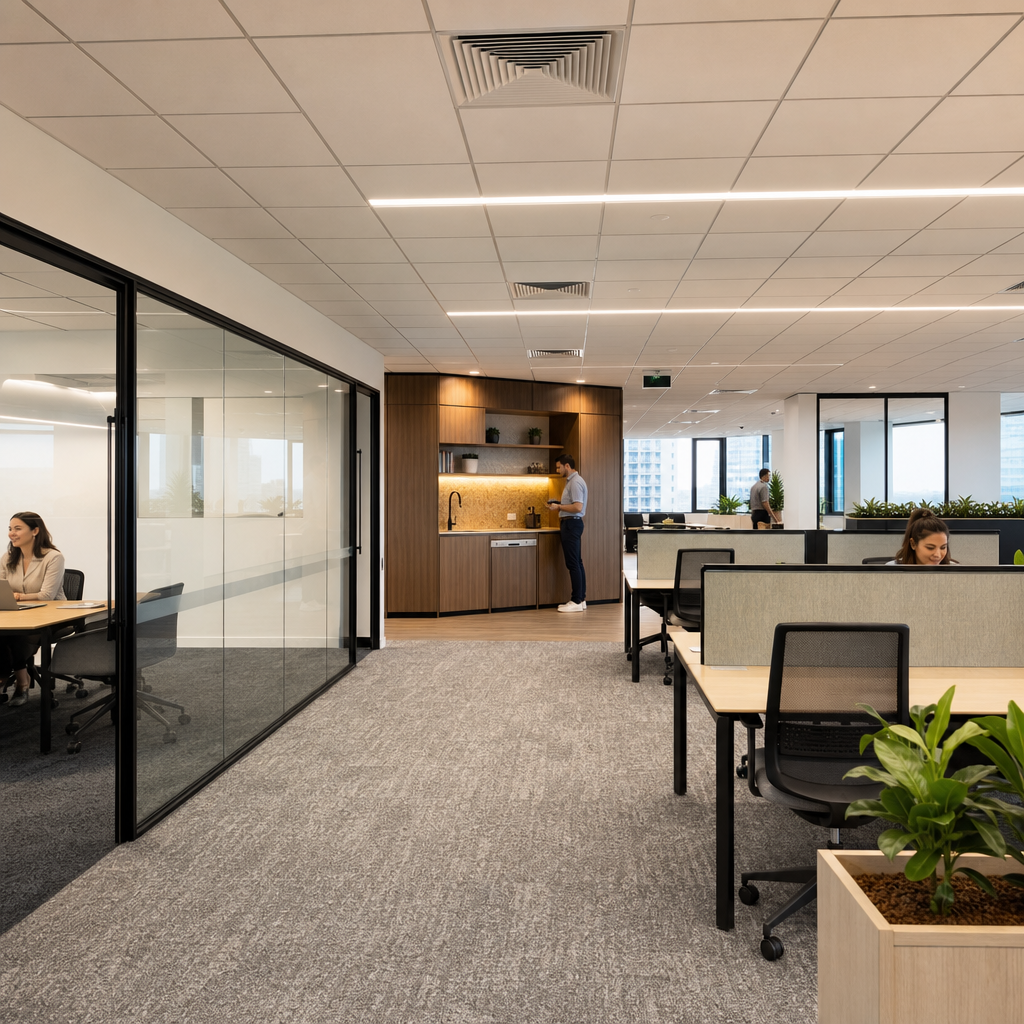
Handover on an office fit out Sydney project is a process, not a date. A properly closed out tenancy gives you a document set you will use for years.
Your handover pack should include as built drawings, an operation and maintenance manual, electrical and mechanical certificates, air balance reports, fire system test records, warranties for joinery, flooring, furniture and equipment, keys and access credentials, cleaning and maintenance instructions for specialist finishes, and the updated fire safety schedule where measures changed.
The defects process usually runs like this. A joint inspection produces a defects list before occupation. Access sensitive items are rectified before you move in. The remainder is completed within an agreed period, commonly two to four weeks. A defects liability period, typically twelve months, then covers workmanship issues that appear in normal use. Diarise a review at month eleven so you can raise anything outstanding before that period expires.
In the first ninety days, three things are worth checking. First, mechanical performance under real occupancy, because a floor balanced when empty often needs a second tune once people, screens and meeting room loads are in place. Second, lighting controls and sensor time delays, which are almost always set conservatively at commissioning. Third, acoustic performance in meeting rooms and quiet zones, where a small amount of additional sealing or soft finish often makes a large difference.
Choosing a Contractor for the Construction Stage
By the time an office fit out Sydney project reaches site, your contractor choice is locked, so make it deliberately. For a Sydney tenancy, weigh these:
- Building experience. A contractor who has worked in your building already knows the dock rules, the lift constraints, the building manager and the base building services. That is real program value.
- Directly employed site management. A dedicated site manager on your job, not shared across five tenancies, is the strongest predictor of a clean program.
- Trade relationships. Contractors with long standing subcontractors get better resourcing when the market is busy.
- Transparent pricing. A trade by trade breakdown, clear provisional sums and a named contingency beat a single lump sum figure.
- Licensing and insurance. Current NSW contractor licensing, public liability, workers compensation and, where relevant, home building compensation. Verify, do not assume.
- References from similar scope. Ask about a project of similar size, building type and occupied status, and ask specifically what went wrong and how it was handled.
Frequently Asked Questions
How long does the construction stage of an office fit out Sydney project take?
For a vacated tenancy, roughly six to eight weeks under 300 square metres, eight to twelve weeks for 300 to 800 square metres, and twelve to twenty weeks or more above that. Staged works in an occupied tenancy typically add 20 to 40 percent. Approvals and documentation sit before this and can add four to twelve weeks depending on pathway.
Can we stay in the office during the fitout?
Yes, with zoned staging, temporary services and after hours works for noisy trades. Expect a longer program and higher labour cost. If a swing space or an overlapping lease is available, a vacated build is usually the better economic choice.
Who deals with the building manager during construction?
Your contractor handles day to day permits, dock bookings, isolations and inductions. The tenant remains responsible under the lease for compliance with the landlord’s fitout guide and for damage to base building finishes, so keep copies of every approval and permit.
What happens if the contractor finds asbestos or unexpected conditions?
Work stops in the affected area. For asbestos, a licensed removalist and a clearance certificate are required before trades return. Unexpected conditions such as undocumented services, structural obstructions or non compliant existing work are handled as variations, which is exactly what the contingency is for.
Do we need a certifier for a simple fitout?
Not always. Minor cosmetic works can be exempt development. Once you alter egress, fire compartmentation, sanitary facilities, structure or building services, an approval pathway and a certifier are usually triggered. Have the pathway assessed at design stage, not after site start.
When should furniture be ordered?
At or before site start. Typical Australian lead times run four to twelve weeks and imported product can be longer. Furniture is installed in the final week, so a late order delays occupation even if the build finished on time.
What does a good handover pack contain?
As built drawings, operation and maintenance manuals, compliance certificates for electrical, mechanical and fire, commissioning and air balance data, warranties, keys and access credentials, finish maintenance instructions, and the updated fire safety schedule if essential measures were altered.
How much contingency should we hold during construction?
Five to ten percent of construction value is a sensible range, weighted to the top of it for buildings over about twenty five years old or where base building documentation is incomplete.
Bringing It Together
A successful office fit out Sydney build is mostly the product of decisions made before anyone picks up a tool: a locked design, a realistic program with long lead items on it, an approval pathway confirmed, a landlord consent in hand, and a contractor who knows your building. Once on site, the job is sequencing, permits, inspections and disciplined variation control. Get those right and handover becomes a formality rather than a negotiation. If you are planning a tenancy move or a refurbishment in Sydney, talk to us early, while the program still has room to absorb good advice.
Make Office Fitouts Sydney a preferred source in Google
One click tells Google to surface our articles more often in Top Stories, AI Overviews and AI Mode.